










What's Happening?
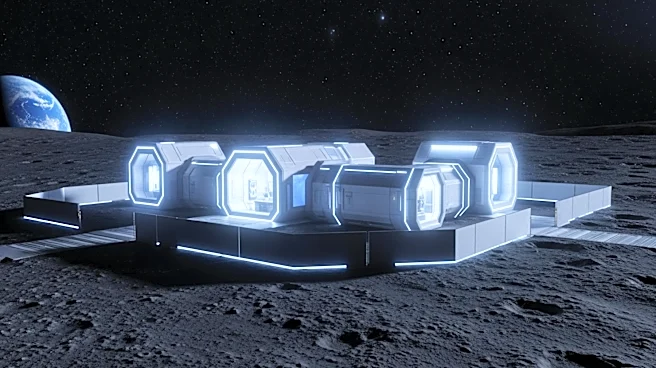
A policy paper suggests that NASA should establish a biocontainment facility on the moon as part of its planned lunar base. This facility would serve as a quarantine and research center for extraterrestrial samples, preventing potentially hazardous biotic
contaminants from reaching Earth. The proposal, co-authored by Frederick I. Moxley and Anthony Ricciardi, emphasizes the need for updated planetary protection strategies as space exploration advances. The authors argue that the moon could act as a biological defense line, handling extraterrestrial materials with advanced robotic systems to minimize human exposure and prevent accidental releases.
Why It's Important?
The establishment of a lunar biocontainment facility could significantly enhance Earth's biosafety measures against unknown extraterrestrial organisms. As space exploration intensifies, with missions to the moon, Mars, and beyond, the risk of introducing alien life forms to Earth's ecosystem increases. Such introductions could have unpredictable and potentially devastating ecological impacts, similar to invasive species on Earth. By addressing these risks proactively, the proposed facility could safeguard Earth's biosphere while supporting scientific endeavors in the search for extraterrestrial life.
Beyond the Headlines
The proposal highlights the ethical and ecological responsibilities of space exploration. It underscores the importance of precautionary measures in preventing biological contamination, which could have irreversible consequences. The idea of using the moon as a quarantine zone reflects a strategic approach to space exploration, balancing scientific curiosity with planetary protection. This initiative could also influence international space policies, encouraging global cooperation in establishing rigorous biosafety standards for future missions.