





What's Happening?
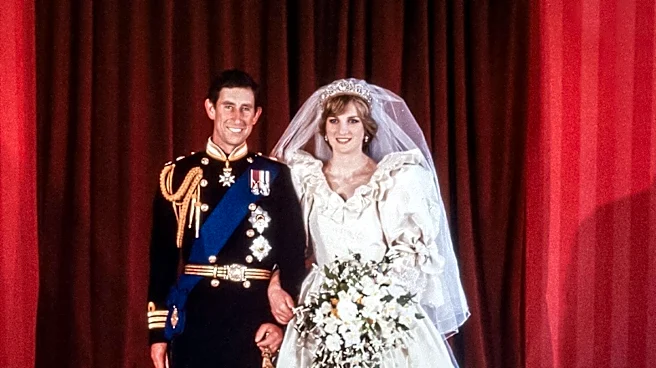
Princess Diana reportedly destroyed one of King Charles' paintings and his art supplies during their honeymoon in July 1981, according to royal biographer Penny Junor. The incident occurred aboard the Royal Yacht Britannia during their 12-day Mediterranean
cruise. Junor's biography, 'The Duchess,' details that King Charles had brought painting materials and books by Laurens van der Post, intending to share and discuss them with Diana. However, Diana, who was not an avid reader, resented his focus on these activities, interpreting them as a form of rejection. She reportedly hated his books and was offended that he preferred them over spending time with her. The tensions escalated, culminating in Diana destroying his painting and materials when he briefly left his easel. This act is described as an early manifestation of the communication problems that would plague their marriage, highlighting how rapidly disappointment could turn into anger between them. A royal source indicated that Diana desired his undivided attention, expecting uninterrupted time as newlyweds, while Charles was accustomed to his solitary pursuits.
Why It's Important?
This reported incident offers a critical early insight into the profound marital discord between Princess Diana and King Charles, even at the very beginning of their union. It underscores the fundamental differences in their expectations and personalities, which ultimately contributed to the highly publicized breakdown of their marriage. For the public, this revelation provides a deeper understanding of the personal struggles within the royal family, moving beyond the public facade of a fairytale wedding. It highlights the immense pressure and scrutiny faced by individuals in such prominent roles, where personal incompatibilities can have significant public and historical ramifications. The event also sheds light on the emotional toll of royal life, where individual desires and needs often clash with institutional expectations and public image. Understanding these early tensions is crucial for comprehending the subsequent narrative of their relationship and its impact on the British monarchy.
What's Next?
While this event is historical, its continued discussion in biographies and media indicates an ongoing public fascination with the personal lives of the British Royal Family. Future royal biographies and documentaries are likely to continue exploring such pivotal moments, offering new perspectives or reinforcing existing narratives about the relationship between Princess Diana and King Charles. The enduring interest in their story suggests that any new details or interpretations will continue to shape public perception of the monarchy and its members. For the current Royal Family, particularly King Charles, these historical accounts serve as a constant reminder of past challenges and the complexities of royal relationships, influencing how they manage their public image and private lives moving forward. The narrative surrounding Diana and Charles remains a significant part of modern royal history, continually revisited and re-evaluated.
Beyond the Headlines
The reported destruction of King Charles' art by Princess Diana transcends a mere marital spat; it symbolizes a deeper clash between individual needs and the rigid expectations of royal life. Diana's act can be interpreted as a desperate cry for attention and connection within a marriage that, from its inception, was fraught with miscommunication and differing priorities. It highlights the psychological pressures placed on individuals marrying into the monarchy, where personal fulfillment can be overshadowed by duty and public image. This incident also subtly critiques the traditional royal upbringing, which may not have adequately prepared King Charles for the emotional demands of a modern marriage. Furthermore, it underscores the enduring human element within even the most elevated institutions, demonstrating that personal struggles and emotional turmoil are universal, regardless of status. The story serves as a poignant reminder of the human cost behind the grandeur of royalty.