








What's Happening?
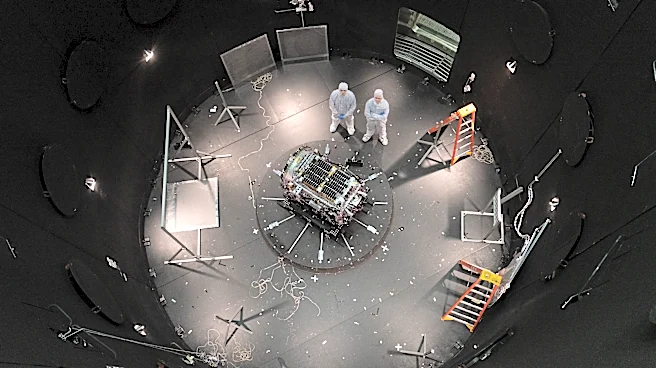
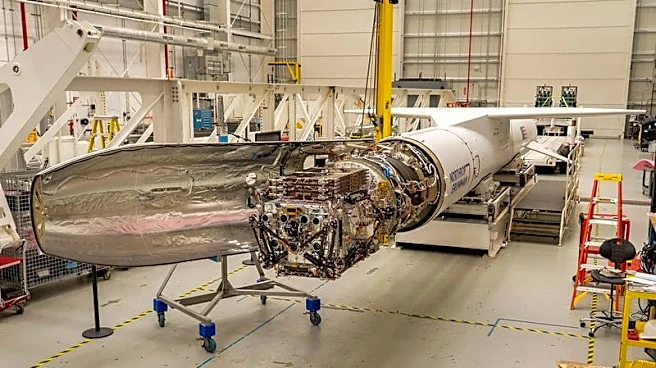
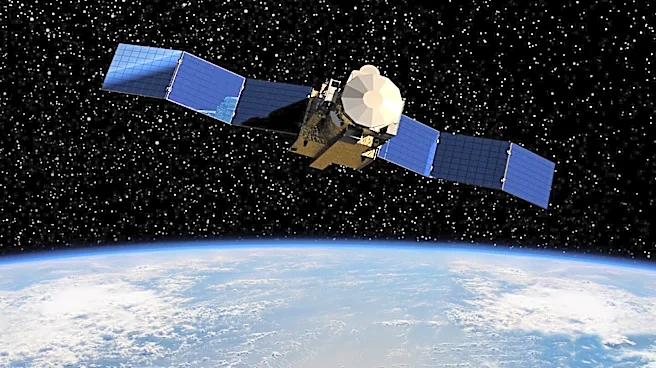
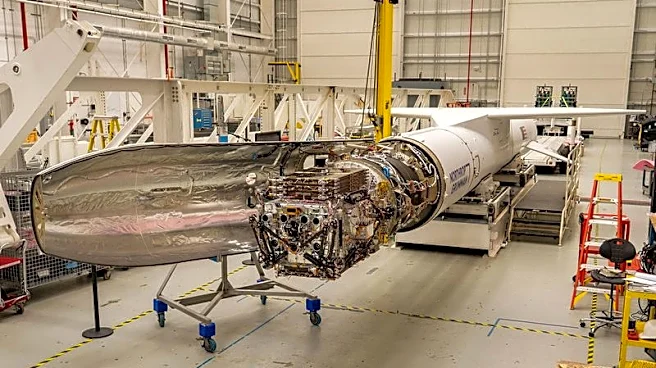
NASA has launched a rescue mission to save the Neil Gehrels Swift Observatory, which is at risk of crashing back to Earth due to its decreasing orbit. The mission involves a three-armed spacecraft, developed by Katalyst Space Technologies, which was launched from
the Marshall Islands using a Pegasus rocket. The spacecraft, named Link, is tasked with capturing the Swift Observatory and boosting its orbit by 150 miles to ensure it can continue its mission of tracking cosmic phenomena such as gamma-ray bursts and exploding stars. The Swift Observatory, launched in 2004, has been experiencing a faster descent due to recent solar storms. NASA has allocated $30 million for this mission, which is expected to be completed by September if successful.
Why It's Important?
The successful execution of this mission is crucial for the continuation of the Swift Observatory's scientific contributions, which include monitoring some of the universe's most powerful explosions. The mission also represents a significant technological achievement in space operations, showcasing the potential for future satellite and telescope salvage missions. This could set a precedent for extending the operational life of other space assets, such as the Hubble Space Telescope, which faces similar challenges due to atmospheric drag. The mission underscores the importance of maintaining and extending the life of valuable space infrastructure, which plays a critical role in advancing our understanding of the universe.
What's Next?
If the mission is successful, the Swift Observatory will resume its scientific operations by September. The outcome of this mission could influence future decisions regarding the maintenance and extension of other aging space telescopes and satellites. NASA and other space agencies may consider similar salvage operations for other critical space assets, potentially leading to new partnerships and technological advancements in space exploration and satellite maintenance.