
What's Happening?
An outbreak of highly pathogenic avian influenza A (H5N1) virus in an Illinois backyard poultry flock has been confirmed to have spread to a domestic cat and wild rats on the same property. This finding,
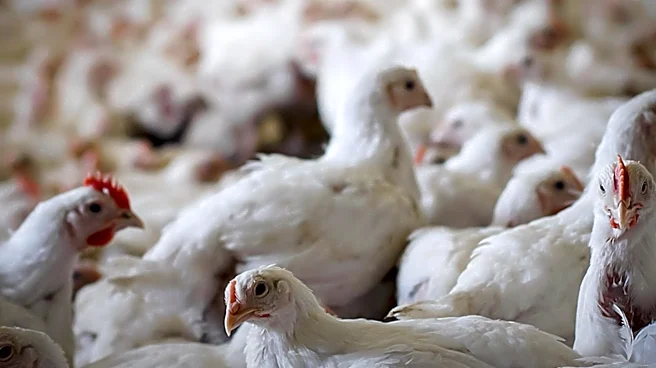
detailed in a case study published in the journal Emerging Infectious Diseases by researchers from the University of Illinois Urbana-Champaign Veterinary Diagnostic Laboratory and the University of Missouri Veterinary Medical Diagnostic Laboratory, indicates the virus's ability to extend beyond avian species. The outbreak began in March 2025, leading to the loss of 100 out of 105 backyard birds. Subsequent testing of a deceased cat and wild rat from the farm confirmed H5N1 infection in both mammals. Dr. Leyi Wang, virology section head at the University of Illinois laboratory, led the team that examined the specimens. Genomic sequencing revealed nearly identical viral genomes across the chicken, cat, and rat samples, suggesting a shared infection source and a specific mutation associated with adaptation to mammalian hosts.
Why It's Important?
The confirmed transmission of H5N1 from poultry to a domestic cat and wild rats on an Illinois farm highlights a significant concern for public health and agricultural biosecurity. The detection of systemic infection in the cat and viral shedding in rat urine suggests that these mammals could act as vectors, potentially contaminating the farm environment and introducing new exposure routes for other animals and even humans. This mammalian adaptation signal, as noted by Dr. Wang, is crucial for ongoing influenza surveillance, as it indicates the virus's evolving capacity to infect different species. The findings underscore the need for heightened vigilance among poultry owners and veterinary practitioners, particularly regarding rodent control and preventing contact between domestic animals and wild birds. The potential for zoonotic transmission, where diseases jump from animals to humans, remains a key concern, even if the risk to the general public is currently considered low.
What's Next?
Following these findings, researchers and public health officials are advising increased biosecurity measures for poultry owners. Recommendations include separating poultry from wild waterfowl, promptly reporting abrupt bird die-offs, implementing effective rodent control strategies, and preventing farm cats from scavenging dead birds. Veterinarians investigating suspected avian influenza deaths in poultry are also advised to handle any sick or deceased mammals on the same premises with appropriate protective precautions. The study emphasizes the need for continuous surveillance of influenza viruses, particularly for genetic changes that indicate adaptation to mammalian hosts. This ongoing monitoring will be critical for understanding the virus's evolution and for developing strategies to mitigate potential risks to animal and human health.
Beyond the Headlines
The spread of H5N1 to mammals on an Illinois farm raises deeper questions about the ecological dynamics of avian influenza and its potential long-term implications. The presence of the virus in wild rats, which are common in agricultural environments, suggests a persistent reservoir that could complicate eradication efforts and increase the likelihood of spillover events. This situation highlights the interconnectedness of animal health, environmental factors, and human well-being, underscoring the 'One Health' approach to disease management. The genetic adaptation of the virus to mammalian hosts, even if currently limited, serves as a stark reminder of the constant evolutionary pressure on pathogens and the need for proactive research into viral mutations and host range expansion. This event could influence future agricultural policies, veterinary practices, and public health preparedness strategies, emphasizing the importance of integrated surveillance systems across different species.