






What's Happening?
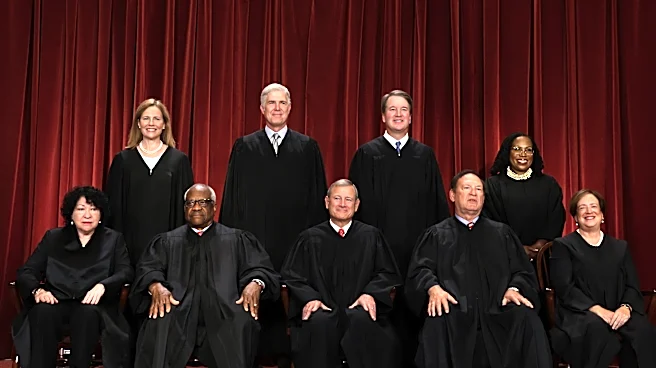
Radiolab is re-airing an episode from its 'More Perfect' series that delves into the Eighth Amendment of the U.S. Constitution, specifically the phrase 'cruel and unusual punishment.' The episode, originally aired in 2016, explores the historical and evolving
interpretations of this concept within the context of the death penalty in America. It highlights how public opinion, with a majority favoring capital punishment, contrasts with the shifting views within the Supreme Court. The discussion extends beyond legal chambers to include international efforts to challenge the U.S. death penalty system and the reintroduction of older execution methods by states. The re-broadcast also features a new conversation with Harvard law professor Carol Steiker and former death-row inmate Damien Nichols, addressing the current state of the death penalty in 2026, particularly in light of recent events like the botched execution of Christa Pike and considerations of livestreaming firing squad executions. The episode aims to provoke a deeper understanding of what constitutes cruel and unusual punishment today.
Why It's Important?
This re-examination by Radiolab is significant because it brings renewed attention to a fundamental constitutional debate that continues to shape the U.S. justice system. The discussion around 'cruel and unusual punishment' directly impacts public policy regarding capital punishment, influencing legislative decisions at the state and federal levels. The evolving opinions within the Supreme Court, as highlighted in the episode, demonstrate the dynamic nature of legal interpretation and its profound effects on individuals facing the death penalty. Furthermore, the episode's inclusion of international perspectives and the practical challenges faced by states in carrying out executions underscore the complex ethical and logistical dimensions of capital punishment. For civil society groups, legal scholars, and the public, this broadcast serves as a critical platform for understanding the historical context, current controversies, and future trajectory of the death penalty in the United States, potentially influencing advocacy efforts and public discourse on judicial reform.
What's Next?
The re-broadcast of this Radiolab episode is likely to reignite public discussion and legal scrutiny surrounding the death penalty in the U.S. The updated conversation with legal experts and a former death-row inmate suggests an ongoing relevance of the topic, particularly as states continue to grapple with execution methods and legal challenges. This could lead to increased advocacy from human rights organizations pushing for abolition or reform of capital punishment. Legislators might face renewed pressure to review existing laws and practices related to executions, especially in states where controversial methods are being considered or have been recently employed. The episode's focus on the Supreme Court's evolving stance could also foreshadow future legal challenges to the constitutionality of certain execution practices or the death penalty itself, potentially leading to new landmark rulings that redefine 'cruel and unusual punishment' in the modern era. Public engagement with the podcast may also influence broader societal attitudes towards capital punishment.
Beyond the Headlines
Beyond the immediate legal and policy implications, Radiolab's exploration of 'cruel and unusual punishment' delves into profound ethical and moral questions about state-sanctioned killing. The episode implicitly challenges societal norms and values by examining how definitions of cruelty evolve over time and across different cultural contexts. The discussion of botched executions and the consideration of livestreaming firing squads raises critical questions about transparency, human dignity, and the spectacle of punishment in a modern society. This re-broadcast could foster a deeper public introspection into the purpose of punishment—whether it is purely retributive, a deterrent, or a form of societal control. It also highlights the enduring tension between public opinion favoring the death penalty and the constitutional protections against cruel and unusual punishment, prompting a re-evaluation of how justice is administered and perceived in the United States. The episode encourages listeners to consider the long-term societal impact of capital punishment on the nation's moral fabric.