



What's Happening?
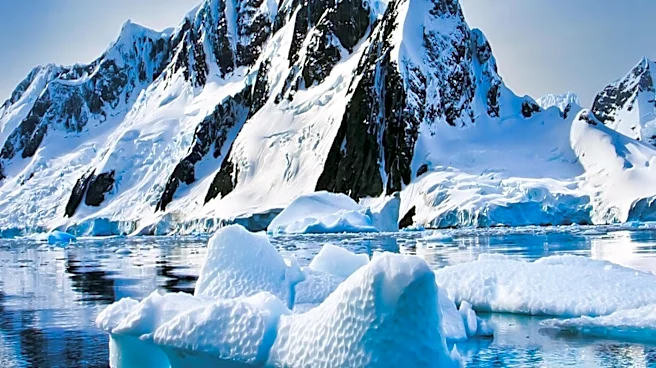
New research published in Earth and Planetary Science Letters suggests that ancient, now-eroded mountains beneath Antarctica played a crucial role in the evolution of complex life on Earth. Before this study, the true scale and origin of these hidden
Antarctic ranges were largely unknown. Bei Chen of the GFZ German Research Center for Geosciences and Ian H. Campbell of the Australian National University analyzed microscopic mineral grains, specifically zircon, eroded from these ancient peaks and deposited in ocean sediments around the continent. By dating 1,712 zircon grains, they found that most formed between 650 and 450 million years ago, coinciding with the formation of the supercontinent Gondwana. Comparing these Antarctic zircons with a global database of river sediments indicated that many originated from the deep roots of massive, Himalayan-style mountain ranges, which the study authors refer to as the 'Gondwanan Supermountains,' the largest ultra-high mountain network in Earth's history.
Why It's Important?
This discovery offers a compelling link between geological processes and the 'Cambrian explosion,' a period of rapid diversification of life on Earth. The researchers propose that as these massive supermountains eroded, they delivered colossal amounts of mud, sand, and essential nutrients into the oceans. This influx of nutrients is believed to have stimulated the growth of photosynthetic organisms at the base of the marine food web, leading to a significant increase in oxygen production. Crucially, the sediment eroded from the mountains also helped bury organic carbon produced by photosynthesis, preventing it from reacting with oxygen and allowing oxygen to accumulate in the atmosphere. This mechanism provides a plausible explanation for how Earth's atmosphere became sufficiently oxygenated to support the development of complex, multicellular life. The study highlights a fundamental connection between Earth's geological history and the trajectory of biological evolution, suggesting that periods of intense mountain building were not merely physical events but critical drivers of life's advancement.
What's Next?
The research establishes a strong correlation between the planet's most dramatic period of evolution and its most significant period of mountain building. Future research will likely focus on further refining the timeline and mechanisms of nutrient delivery and carbon burial associated with these ancient supermountains. Scientists may seek to identify more specific types of nutrients and their impact on different photosynthetic organisms. Additionally, investigations could explore how the scale and duration of mountain-building events correlate with the intensity and timing of evolutionary bursts in the fossil record. The findings could also prompt a re-examination of other ancient mountain ranges and their potential roles in shaping Earth's early biosphere. Understanding these deep-time connections between geology and biology can provide valuable insights into the conditions necessary for the emergence and diversification of complex life, both on Earth and potentially on other planets.
Beyond the Headlines
The concept that 'supermountains' could directly influence the evolution of life introduces a profound perspective on Earth's interconnected systems. It suggests that the planet's physical architecture, through processes like orogeny and erosion, can act as a fundamental catalyst for biological innovation. This goes beyond simple environmental conditions, positing a dynamic feedback loop where geological forces create the very conditions for life to thrive and diversify. The study also subtly touches upon the idea of 'planetary habitability' and the complex interplay of factors required for a planet to sustain advanced life. The discovery of these lost Antarctic mountains, and their inferred impact, underscores how much remains unknown about Earth's deep past and how seemingly disparate fields like geology and biology are inextricably linked in the grand narrative of our planet's history. It encourages a holistic view of Earth as a single, integrated system where changes in one component can have cascading effects across all others.