




What's Happening?
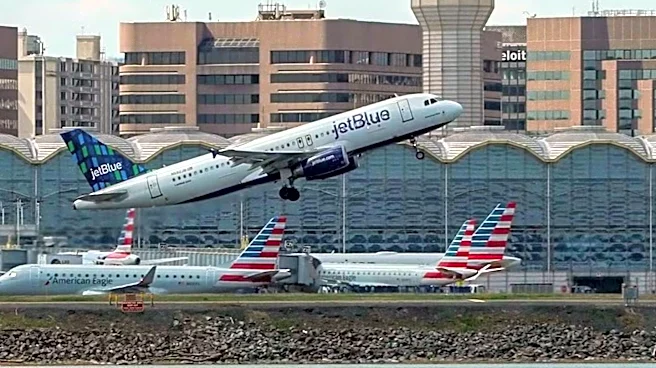
Washington National Airport's Terminal 1, known as 'the banjo,' is set for a $933 million redevelopment. The project will replace the existing terminal with a new nine-gate concourse and a headhouse for ticketing and baggage systems. The redevelopment aims
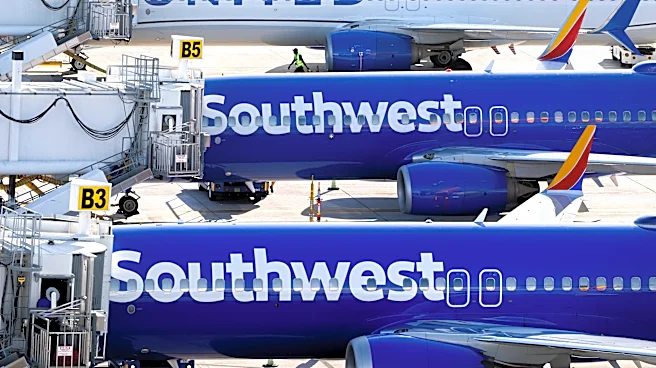
to preserve the historically protected portions of the original terminal while modernizing passenger facilities. The new concourse will feature a 10,000 square foot lounge, likely for Southwest Airlines, which currently operates from Terminal 1 along with Air Canada and Frontier Airlines. The project is expected to be completed in phases, with the new concourse operational by 2031 and the headhouse by 2044.
Why It's Important?
This redevelopment is a significant investment in Washington National Airport's infrastructure, aimed at enhancing passenger experience and operational efficiency. By modernizing facilities and integrating historical elements, the project seeks to balance heritage preservation with contemporary needs. For Southwest Airlines, the new lounge represents an opportunity to enhance its service offerings and attract premium passengers. The redevelopment also reflects broader trends in airport modernization, which are essential for accommodating future growth and maintaining competitiveness. The project's phased approach ensures continuity of operations, minimizing disruptions for airlines and passengers.
What's Next?
As the redevelopment progresses, passengers and airlines will experience changes in terminal operations and access. The phased construction will maintain nine operational gates throughout the project, with new gates opening before old ones are closed. The introduction of a new lounge could influence competitive dynamics among carriers, potentially leading to enhanced passenger amenities. The airport authority will continue to coordinate with stakeholders to optimize the design and functionality of the new facilities. The project's completion will mark a significant milestone in the airport's evolution, enhancing its capacity to serve the Washington, D.C. area.