


What's Happening?
A regional plan has been proposed to address environmental challenges in the Middle East, focusing on water scarcity and renewable energy. The initiative, termed the India Middle-East Europe Economic Corridor (IMEC) or the Peace Triangle, aims to create
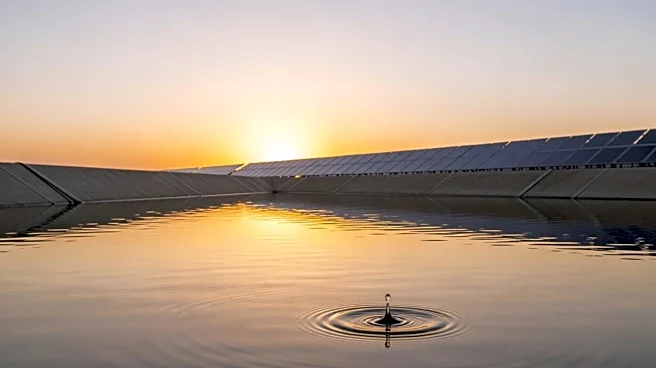
an economic corridor from Mumbai to Europe, passing through several Middle Eastern countries. Key components include Jordan selling renewable energy to Israel, Gaza, and the West Bank, and constructing a desalination plant in Gaza powered by these renewables. This plant would provide water to Gaza, the West Bank, and Jordan. The plan is supported by environmental experts and organizations like EcoPeace, which work across Israel, Jordan, and the Palestinian Authority. The initiative seeks to foster regional cooperation by addressing shared environmental needs, despite existing political tensions.
Why It's Important?
The proposed environmental cooperation in the Middle East is significant as it addresses critical issues of water scarcity and energy dependency, which are prevalent across the region. By focusing on renewable energy and water desalination, the initiative could reduce reliance on fossil fuels and improve water access, particularly in water-scarce areas like Jordan and the West Bank. This cooperation could also serve as a model for overcoming political barriers through shared environmental goals, potentially leading to greater regional stability. The involvement of countries like Saudi Arabia and the UAE in funding the initiative highlights the potential for economic and environmental collaboration to transcend political conflicts.
What's Next?
The next steps for the initiative involve securing investments from Saudi Arabia and the UAE to kickstart the project. The success of the plan depends on overcoming political and logistical challenges, such as regional fiscal disparities and governance issues. If implemented, the initiative could lead to increased export of renewable energy from Gaza to Europe and improved water access in the region. However, political tensions, such as those between Israel and Jordan, may pose obstacles to the project's progress. Continued advocacy and negotiation will be necessary to move the initiative forward.
Beyond the Headlines
The initiative's focus on environmental cooperation highlights the potential for addressing broader geopolitical issues through shared ecological goals. By prioritizing environmental needs, the plan could pave the way for more sustainable and peaceful regional relations. The historical context of similar cooperation models, such as the post-WWII coal and steel treaty in Europe, suggests that economic interdependence can foster lasting peace. However, the Middle East's unique political landscape and resource weaponization present challenges that must be navigated carefully.