



What's Happening?
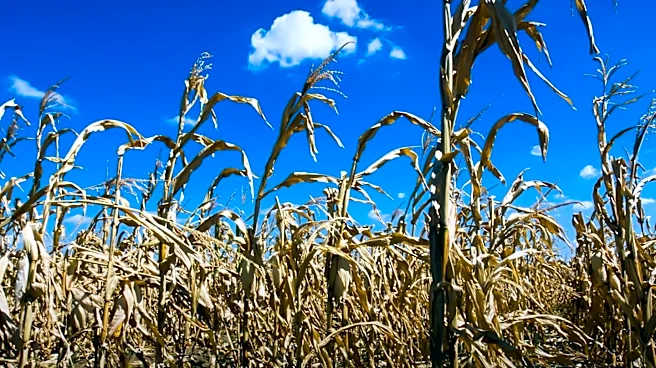
Specialty farmers in the U.S. are adjusting their practices in response to prolonged and intense heat waves, which are part of a broader pattern of climate change-driven weather extremes. These conditions have led to shorter planting windows and potential
crop losses due to early-season heat followed by freezes. Farmers like Annie Woods and Paul Rasch are adapting by altering harvest schedules to avoid the hottest parts of the day and implementing measures such as shade tents and air conditioning to protect crops and workers. The heat dome, a high-pressure system trapping heat and humidity, has particularly affected those growing fruits and vegetables, necessitating changes in traditional farming practices.
Why It's Important?
The increasing frequency and intensity of heat waves pose significant challenges to U.S. agriculture, particularly for specialty crop farmers who lack the same safety nets as commodity crop producers. These extreme weather events threaten crop quality and yield, impacting the agricultural economy and food supply. The need for adaptation highlights the vulnerability of small-scale farmers to climate change and underscores the importance of developing more resilient agricultural practices. The situation also raises concerns about the adequacy of current crop insurance programs, which are not well-suited to the diverse and small-scale nature of specialty farming.
What's Next?
Farmers are likely to continue seeking innovative solutions to mitigate the impacts of extreme weather, such as diversifying crops and improving infrastructure to protect against heat. There may be increased advocacy for policy changes to make crop insurance more accessible and effective for specialty farmers. Additionally, ongoing climate change could drive further research and investment in sustainable agricultural practices to ensure food security and farmer livelihoods in the face of environmental challenges.
Beyond the Headlines
The adaptation strategies employed by specialty farmers may serve as a model for broader agricultural resilience efforts. The challenges faced by these farmers also highlight the need for systemic changes in agricultural policy and insurance frameworks to better support diverse farming operations. As climate change continues to alter weather patterns, the agricultural sector must evolve to maintain productivity and sustainability.