



What's Happening?
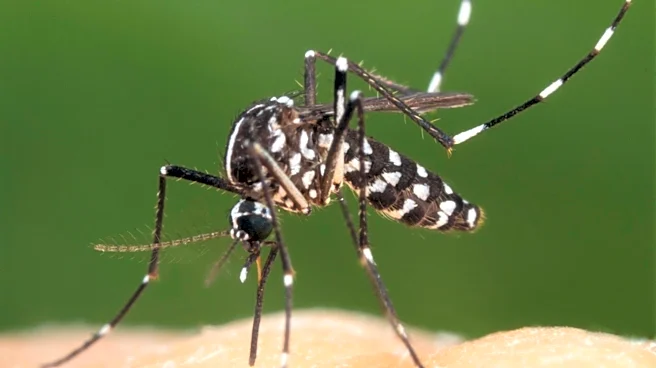
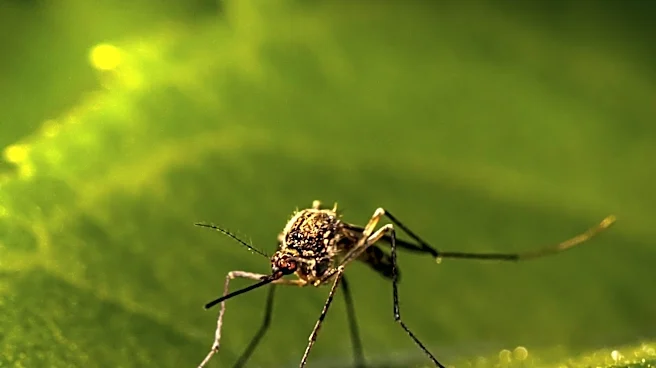
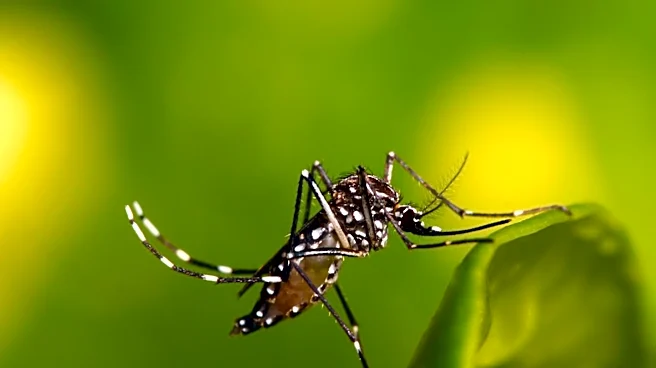
Edmonton is experiencing a significant increase in its mosquito population, with trap counts rising from an average of 21 to 20,000 in just seven weeks. This surge is primarily attributed to the Aedes vexans species, which thrives in wet conditions. The
city has more than 30 mosquito species, but Aedes vexans is the predominant nuisance, known for its stealthy bites on large mammals. Heavy rainfall triggers the hatching of these mosquitoes, which can develop from egg to adult in just five days. Edmonton employs a ditch and ground control program using biological pesticides to manage mosquito larvae, but it does not spray for adult mosquitoes. The city stopped using DDT in 1972 and ended fogging in 1993. The current strategy focuses on reducing mosquito waves following major rainfall rather than eliminating them entirely.
Why It's Important?
The dramatic increase in mosquito population poses potential public health concerns, particularly with diseases like West Nile virus, although the current surge is not directly linked to an increase in West Nile cases. The Aedes vexans species, responsible for the current spike, does not carry the virus. However, the situation highlights the importance of effective mosquito control measures to prevent potential outbreaks of mosquito-borne diseases. The city's approach to mosquito management, focusing on larval control rather than adult mosquito elimination, reflects a shift towards more sustainable and environmentally friendly practices. This strategy, while effective in reducing mosquito numbers, may not fully address the nuisance and potential health risks posed by adult mosquitoes migrating from surrounding areas.
What's Next?
Edmonton will continue its larval control program, which runs from early April to late summer, depending on conditions. The city advises residents to take personal protective measures, such as using repellents and eliminating standing water around homes, to reduce mosquito breeding sites. The effectiveness of these measures will largely depend on weather patterns, as heavy rainfall can quickly lead to new mosquito outbreaks. The city will also monitor mosquito populations and adjust its control strategies as needed. Public awareness campaigns may be necessary to educate residents on the importance of personal and community-level mosquito control efforts.
Beyond the Headlines
The increase in mosquito population in Edmonton underscores broader environmental and public health challenges. Climate change, with its associated extreme weather patterns, may exacerbate mosquito breeding conditions, leading to more frequent and severe outbreaks. This situation also raises questions about urban planning and the need for integrated pest management strategies that consider both environmental sustainability and public health. The reliance on biological pesticides and the cessation of adult mosquito spraying reflect a growing trend towards environmentally conscious pest control methods, but also highlight the limitations of such approaches in dealing with large-scale mosquito invasions.