





What's Happening?
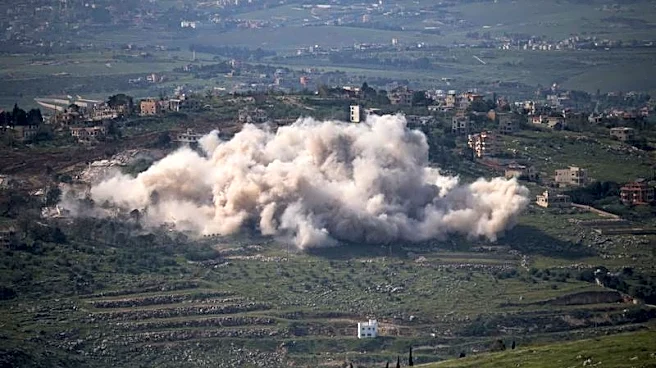
Hezbollah's Secretary-General Naim Qassem has publicly rejected direct negotiations with Israel, insisting that the Lebanese government should annul a decision that criminalizes the group. Qassem emphasized that Hezbollah's resistance against Israel is ongoing
and strong, dismissing any outcomes from direct negotiations. He accused the Lebanese government of collaborating with Israel against its own people and insisted that Hezbollah will continue to resist Israeli occupation. Qassem's statements reflect Hezbollah's firm stance against Israel and highlight internal tensions within Lebanon regarding the government's approach to the conflict.
Why It's Important?
Qassem's rejection of direct talks with Israel and his call for continued resistance underscore the persistent tensions between Hezbollah and Israel. This stance complicates efforts for peace and stability in the region, as Hezbollah remains a significant military and political force in Lebanon. The group's resistance strategy could lead to further military confrontations, affecting regional security. The Lebanese government's position is also challenged, as it navigates internal and external pressures to address Hezbollah's actions and the broader conflict with Israel.
What's Next?
The Lebanese government may face increased pressure to address Hezbollah's demands and the internal decision criminalizing the group. The potential for further military engagements between Hezbollah and Israel remains high, with possible implications for regional stability. International actors may seek to mediate or influence the situation to prevent further escalation. The outcome of these developments could significantly impact Lebanon's political landscape and its relations with neighboring countries.