




What's Happening?
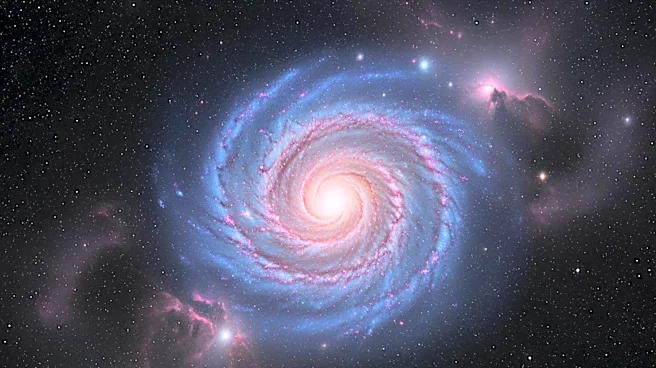
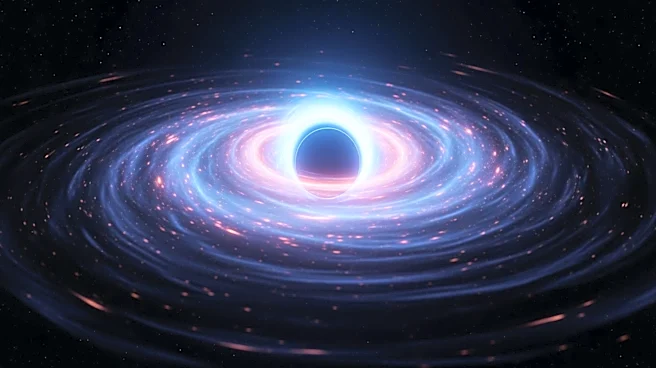
NASA's James Webb Space Telescope has captured a detailed image of Messier 77, a spiral galaxy located 45 million light-years away in the constellation Cetus. The image reveals an extremely bright core, indicating the presence of a supermassive black
hole consuming material at a rapid rate. This observation showcases the telescope's advanced infrared capabilities, which allow it to penetrate dust clouds that obscure visible light. The findings provide a clearer understanding of active galactic nuclei and the interactions between black holes and their surrounding environments.
Why It's Important?
The James Webb Space Telescope's ability to capture detailed images of distant galaxies marks a significant advancement in astronomical research. By providing unprecedented views of active galactic nuclei, the telescope enhances our understanding of how supermassive black holes influence their host galaxies. This knowledge is crucial for developing models of galaxy formation and evolution. The telescope's success also justifies the investment in its development, promising further discoveries that could reshape our understanding of the universe.
What's Next?
As the James Webb Space Telescope continues its mission, astronomers anticipate more groundbreaking discoveries about the universe's structure and dynamics. Future observations will likely focus on other galaxies with active nuclei, providing further insights into the role of black holes in cosmic evolution. The ongoing analysis of data from the telescope will contribute to a deeper understanding of the universe's most energetic phenomena.