
What's Happening?
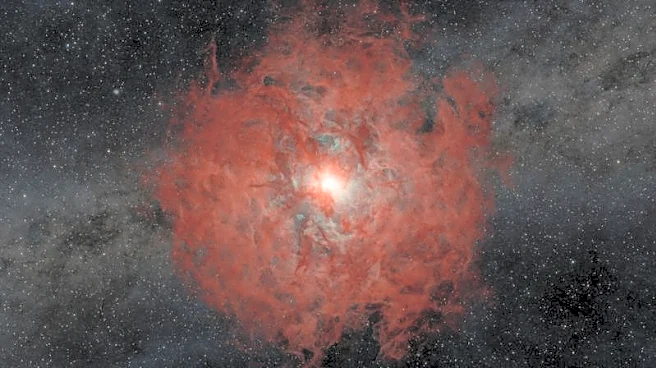
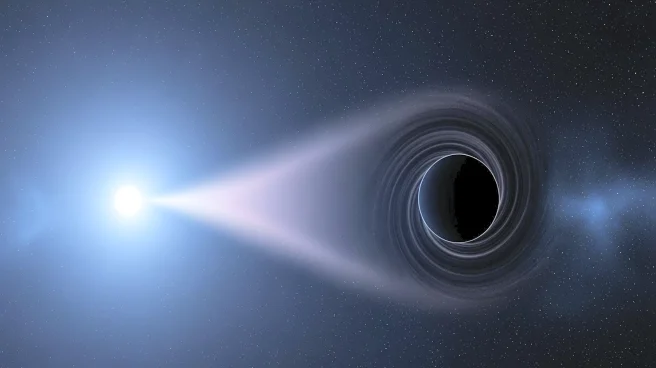
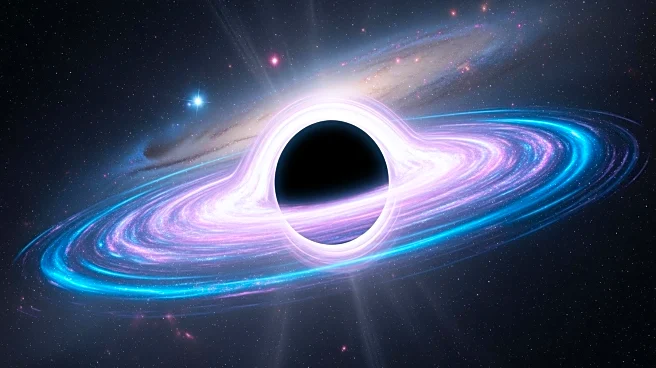
Astronomers have directly observed a massive star in the Andromeda Galaxy, known as M31-2014-DS1, collapse into a black hole without undergoing a supernova explosion. This event, detailed in a study published in Science, provides the most comprehensive
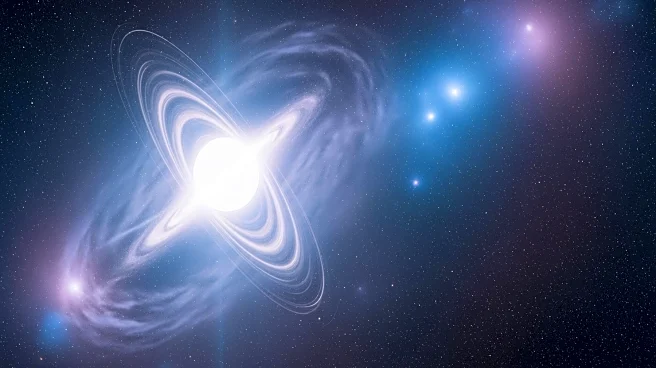
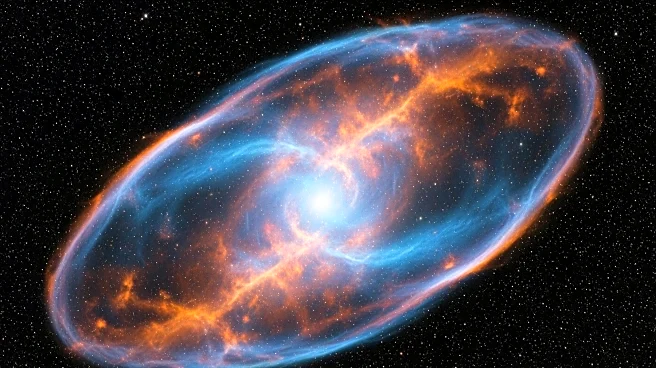
observations of a star transitioning into a black hole. Researchers combined recent telescope data with over a decade of archived observations to refine theories about the end-of-life stages of massive stars. The star, once one of the brightest in the Andromeda Galaxy, began to dim significantly in 2016, eventually fading to a fraction of its original brightness. The study suggests that the star's core collapsed under gravity, forming a black hole, while its outer layers were gradually expelled.
Why It's Important?
This observation is significant as it challenges the traditional understanding that massive stars end their lives in dramatic supernova explosions. Instead, it provides evidence that some stars may quietly collapse into black holes. This finding could reshape theories about stellar evolution and black hole formation, offering a new perspective on the lifecycle of massive stars. The study also highlights the role of convection in preventing the complete collapse of a star's outer layers, which could lead to a better understanding of the conditions under which black holes form. This research may serve as a benchmark for future studies on stellar black holes.
What's Next?
The findings from this study are expected to guide future astronomical research, particularly in understanding the conditions that lead to different end-of-life scenarios for massive stars. The continued observation of the fading light from the debris surrounding the newly formed black hole will provide further insights into the process. Researchers anticipate that the James Webb Space Telescope and other advanced instruments will play a crucial role in monitoring these phenomena over the coming decades, potentially leading to new discoveries about the universe's most enigmatic objects.