





What's Happening?
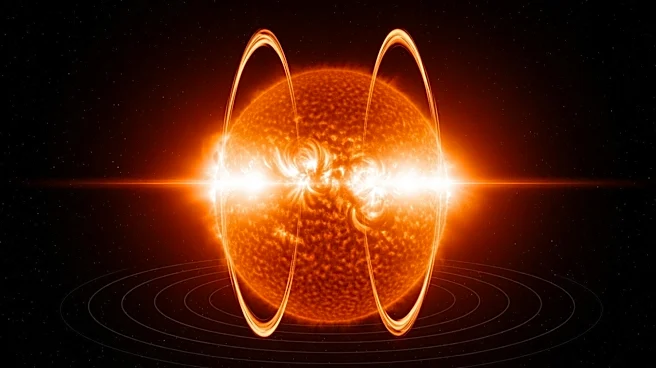
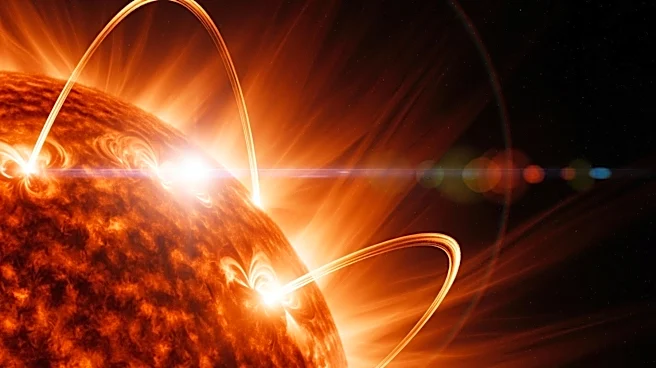
NASA's Solar Dynamics Observatory has captured images of two strong solar flares emitted by the Sun, with the first flare peaking at 9:07 p.m. ET on April 23 and the second at 4:13 a.m. ET on April 24. These flares, classified as X2.4 and X2.5, represent
some of the most intense solar activity. Solar flares are powerful bursts of energy that can affect radio communications, electric power grids, navigation signals, and pose risks to spacecraft and astronauts. The observatory's images highlight the extremely hot material in the flares, which are colorized in gold, blue, and teal to show the ultraviolet light emitted.
Why It's Important?
The occurrence of strong solar flares is significant due to their potential impact on Earth's technological infrastructure. Disruptions to radio communications and power grids can have widespread effects on daily life and economic activities. Additionally, the safety of astronauts and the integrity of spacecraft are at risk during such solar events. Understanding and predicting solar activity is crucial for mitigating these risks and ensuring the resilience of critical systems. NASA's continuous monitoring of the Sun provides valuable data for forecasting space weather and preparing for its effects.
What's Next?
To assess the potential impact of these solar flares on Earth, individuals and organizations can refer to the NOAA's Space Weather Prediction Center, which provides forecasts, watches, warnings, and alerts related to space weather. NASA will continue its research and monitoring efforts to better understand solar activity and its implications. This ongoing work is essential for developing strategies to protect infrastructure and ensure the safety of space missions in the face of solar events.