

What's Happening?
Billionaire entrepreneur Elon Musk has announced his intention to cover the salaries of U.S. Transportation Security Administration (TSA) officers during a federal funding lapse that has left them without pay. This marks the second time in six months
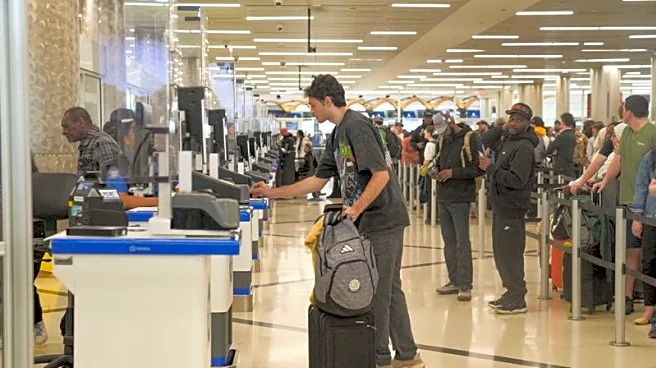
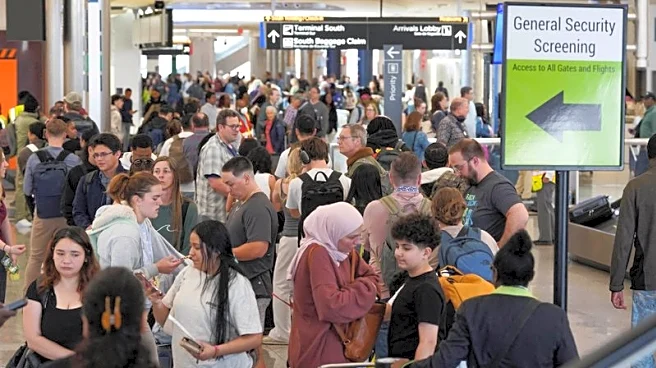
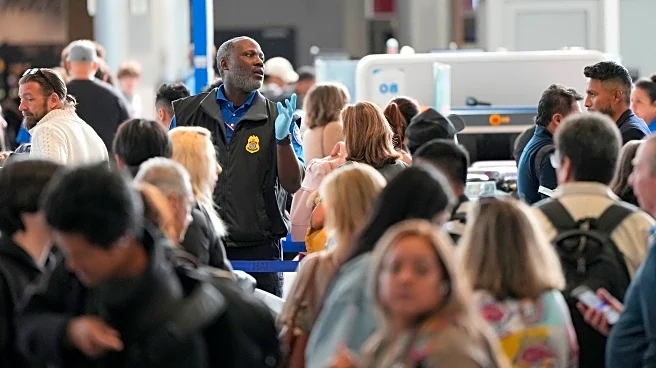
that TSA employees have faced unpaid work stoppages due to budgetary issues. The current impasse involves funding for the Department of Homeland Security (DHS), TSA's parent agency, and has persisted for five weeks. As a result, TSA personnel are on the verge of missing a second paycheck, while being urged to continue working to manage extended screening times at airports. Musk made this offer public through a post on his social media platform, X. The situation has led to airports organizing food drives and accepting donations to support TSA staff, who earn an average annual salary of $61,000. Despite ongoing negotiations, a resolution to the funding dispute remains elusive.
Why It's Important?
The offer by Elon Musk to pay TSA salaries highlights the significant impact of federal budget impasses on essential services and personnel. TSA officers play a critical role in maintaining airport security and ensuring smooth travel operations. The absence of pay for these workers not only affects their livelihoods but also poses a risk to airport efficiency and security. Prolonged screening times can lead to increased passenger frustration and potential security vulnerabilities. Musk's intervention underscores the reliance on private sector support during government funding crises, raising questions about the sustainability of such solutions. The broader implications include potential disruptions in air travel and economic consequences for the aviation industry, which relies heavily on efficient security operations.
What's Next?
As the funding impasse continues, pressure mounts on Congress to reach a bipartisan agreement to restore DHS funding and ensure TSA employees receive their due compensation. The ongoing negotiations are crucial to resolving the budgetary deadlock and preventing further disruptions in airport operations. Stakeholders, including airlines and travel groups, are likely to advocate for a swift resolution to avoid prolonged operational challenges. The situation may also prompt discussions on long-term strategies to prevent similar funding crises in the future, potentially involving legislative reforms or alternative funding mechanisms for critical government functions.