
What's Happening?
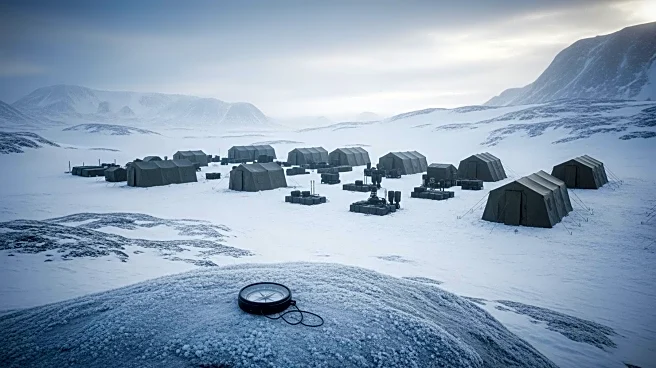
Troops from several European countries, including France, Germany, Norway, and Sweden, are being deployed to Greenland to enhance the Arctic island's security. This move follows discussions between Denmark,
Greenland, and the U.S., which revealed a 'fundamental disagreement' between the Trump administration and European allies. French President Emmanuel Macron announced the deployment of French military elements, with about 15 soldiers already in Nuuk for military exercises. Germany is also sending a reconnaissance team. The Danish government has pledged to increase its military presence in Greenland, with NATO allies joining them. The discussions at the White House involved Danish and Greenlandic foreign ministers meeting with U.S. Vice President JD Vance and Secretary of State Marco Rubio. The talks highlighted President Trump's interest in acquiring Greenland, citing security concerns over Russian and Chinese activities in the Arctic.
Why It's Important?
The deployment of European troops to Greenland underscores the strategic importance of the Arctic region, particularly in light of increasing geopolitical tensions. The U.S. interest in Greenland is driven by its strategic location and potential natural resources, which are becoming more accessible due to climate change. The disagreement between the U.S. and Denmark reflects broader tensions within NATO regarding Arctic security and resource management. The presence of European troops may serve as a counterbalance to U.S. ambitions, potentially complicating U.S. plans to assert greater control over the region. This situation could impact U.S.-European relations and NATO's cohesion, as member states navigate differing priorities and security concerns.
What's Next?
A working group has been established to address the differences between the U.S. and Denmark regarding Greenland. This group will focus on reconciling American security concerns with Denmark's sovereignty over the island. The outcome of these discussions could influence future military and diplomatic strategies in the Arctic. Additionally, the increased military presence in Greenland by European nations may lead to further diplomatic engagements to ensure regional stability. The situation will likely continue to evolve as stakeholders, including NATO, assess the implications of these developments on Arctic security and international relations.