



What's Happening?
The Getty Foundation has initiated a new $2.7 million grant program, 'New Interpretations,' aimed at supporting 11 museums in the U.S. and internationally. This initiative focuses on enhancing visitor experiences through innovative approaches to language,
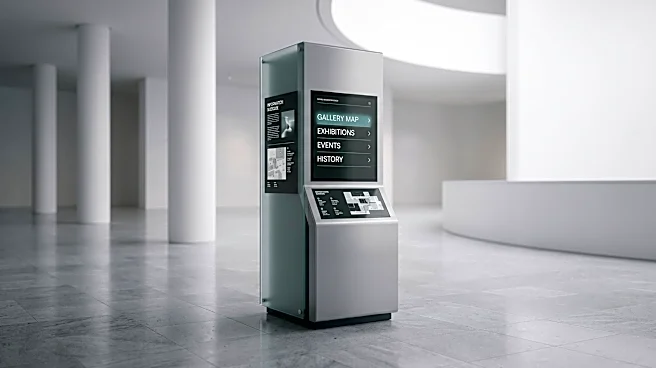
accessibility, and community engagement. The program seeks to move beyond traditional museum interpretation methods, such as standard wall texts, by emphasizing research, collaborative efforts, and the integration of technology. Heather E. MacDonald, the senior program officer of the Getty Foundation, highlighted the foundation's commitment to partnering with institutions that demonstrate a dedication to visitor-centered research. The goal is to foster creative, experimental, and rigorous museum practices that better understand and cater to the needs and desires of visitors. Grantees include prominent institutions like the Baltimore Museum of Art, the Denver Art Museum, the First Americans Museum, the Queens Museum, and the Walker Art Center, among others.
Why It's Important?
This grant initiative is significant for the U.S. museum landscape as it promotes a shift towards more inclusive and engaging visitor experiences. By funding projects that prioritize accessibility and community involvement, the Getty Foundation is encouraging institutions to broaden their appeal and relevance to diverse audiences. The emphasis on visitor-centered research and evaluation means that museums will be better equipped to understand and respond to the evolving needs of their patrons. This could lead to more dynamic and meaningful interactions with art and culture, potentially increasing museum attendance and public engagement. Furthermore, the program's focus on disseminating findings and creating 'ripple effects' suggests a broader impact on museum practices across the country, fostering a culture of innovation and continuous improvement in how cultural institutions connect with their communities. The initiative also highlights the growing importance of technology and collaborative approaches in modern museum operations.
What's Next?
The 'New Interpretations' initiative will see several public-facing projects unfold, with some of the first hosted by the Leeum Museum of Art in Seoul and M+ in Hong Kong, including an international gathering in December 2026 to discuss new approaches to interpretation and visitor engagement in Asia. Within the U.S., the Walker Art Center in Minneapolis will continue its efforts to develop visitor guides and wall texts in Spanish, Hmong, and Somali, building on an initiative started in 2024. The First Americans Museum in Oklahoma City plans to conduct visitor surveys with a focus on Native American audiences and will produce a report on integrating Indigenous knowledge into exhibitions, which will also inform an exhibition on the bicentennial of the Indian Removal Act in 2030. The Denver Art Museum will commission research on the impact of artificial intelligence on visitors, following its earlier stance on AI and authenticity in museums.
Beyond the Headlines
The Getty Foundation's initiative delves into deeper implications for the cultural sector by challenging traditional museum paradigms. By advocating for visitor-centered approaches, the program implicitly addresses the ethical responsibility of museums to be accessible and relevant to all segments of society, not just a select few. The inclusion of projects like the Walker Art Center's multilingual guides and the First Americans Museum's focus on Indigenous knowledge highlights a commitment to cultural equity and representation. The Denver Art Museum's exploration of AI's impact on visitors also touches upon the evolving relationship between technology, authenticity, and human experience in cultural institutions. This initiative could catalyze a long-term shift in how museums define their role in society, moving towards more dynamic, inclusive, and community-driven models that reflect the diverse cultural landscape of the U.S. and beyond.