



What's Happening?
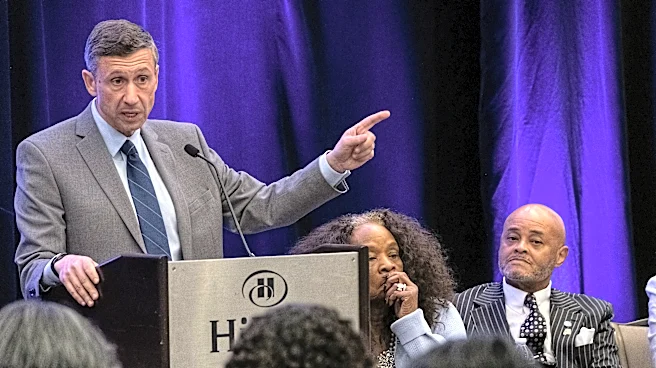
A U.S. Congressional field hearing was held in Biddeford, Maine, to investigate the fatal shooting of Johan Sebastián Durán Guerrero by an ICE officer on July 13, 2026. The hearing was convened by U.S. Rep. Chellie Pingree, U.S. House Committee on Homeland
Security Ranking Member Bennie Thompson (D-MS), and U.S. House Democratic Whip Katherine Clark (D-MA). Maine Governor Janet Mills delivered the opening remarks. The 25-year-old Guerrero was shot and killed while in his car. The hearing aimed to scrutinize the use of force by ICE and its operations in the region. Witnesses included Biddeford Mayor Liam LaFountain, Sue Roche, executive director of the Immigrant Legal Advocacy Project, Mufalo Chitam, executive director of the Maine Immigrants’ Rights Coalition, and Guerrero family attorney Ben Gideon. According to Rep. Pingree, ICE members and Republican members of Congress were invited to attend.
Why It's Important?
This congressional field hearing is significant as it directly addresses concerns about federal law enforcement accountability and the use of force by Immigration and Customs Enforcement (ICE) officers. The involvement of high-ranking congressional members, including the Democratic Whip, underscores the national attention on this incident and its implications for immigration policy and civil rights. The lack of information provided to the family's attorney regarding the investigation highlights potential transparency issues within federal agencies, which could erode public trust and fuel calls for reform. Governor Mills's strong stance, advocating for fundamental reform or abolition of ICE, reflects a growing sentiment among some political leaders and community advocates regarding the agency's practices. The potential for a civil lawsuit against the government and the ICE agents involved could set a precedent for future cases involving federal law enforcement actions.
What's Next?
The Guerrero family's attorney, Ben Gideon, plans to use the field hearing to press for further investigation into the shooting and the vetting processes for ICE officers. Gideon indicated a high likelihood of a civil lawsuit against the government and the involved ICE agents, especially as their independent investigation has received new information. Governor Mills has called for immediate congressional action to fundamentally reform or abolish ICE and has demanded a full accounting of the incident. The outcome of this hearing and any subsequent legal actions could lead to increased scrutiny of ICE's operational procedures, potential policy changes, or even legislative efforts to reform the agency. The ongoing independent investigation by the family's legal team will be crucial in determining the next steps and potential legal challenges.
Beyond the Headlines
The fatal shooting of Johan Sebastián Durán Guerrero and the subsequent congressional hearing delve into deeper ethical and legal questions surrounding the authority and accountability of federal law enforcement agencies like ICE. The incident highlights the tension between national security interests and individual civil liberties, particularly for immigrant communities. The call for reform or abolition of ICE by a state governor reflects a broader societal debate about the agency's role and methods in a democratic society. This event could trigger long-term shifts in how federal immigration enforcement is perceived and regulated, potentially leading to more stringent oversight mechanisms or a re-evaluation of the agency's mandate. The case also underscores the challenges faced by families seeking justice and transparency when confronted with federal investigations, raising questions about access to information and due process.