




What's Happening?
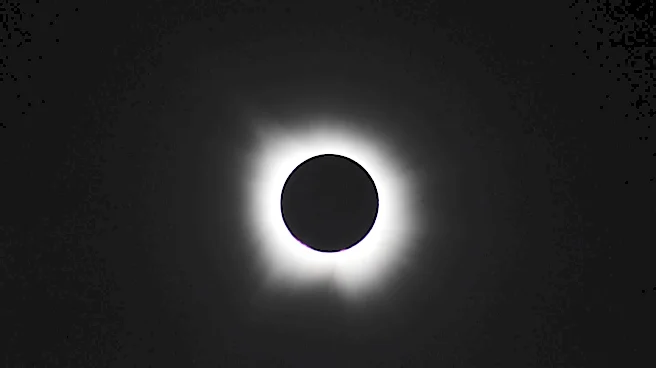
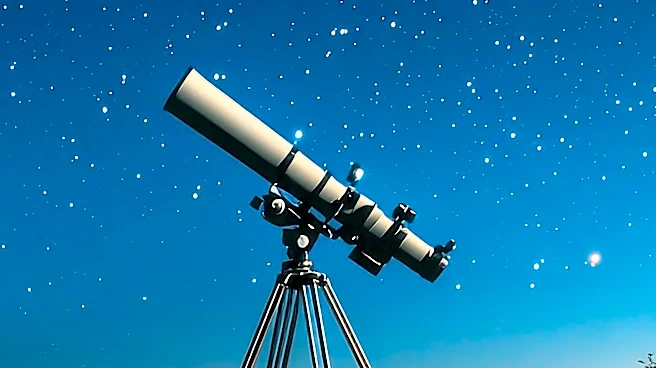
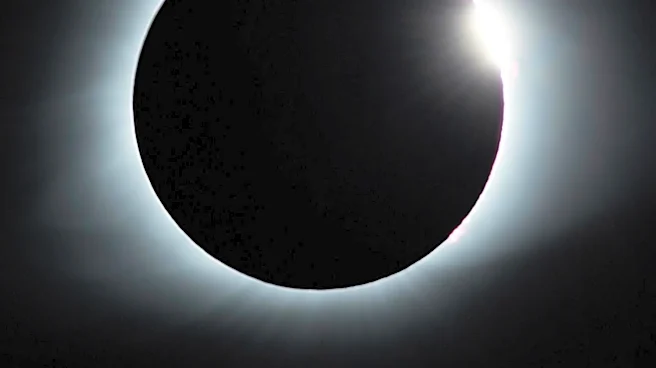
On July 28, 1851, Johann Julius Friedrich Berkowski, a Prussian daguerreotypist, captured the first-ever photograph of a total solar eclipse. Using a small telescope, Berkowski managed an 84-second exposure that successfully documented the sun's corona
during totality. This achievement marked a significant milestone in astronomical photography, allowing scientists to study solar eclipses and the sun's outer atmosphere in greater detail. Berkowski's work paved the way for future advancements in eclipse photography, making these rare celestial events more accessible to the public.
Why It's Important?
Berkowski's photograph of the solar eclipse was a groundbreaking development in the field of astronomy, providing a visual record that enhanced scientific understanding of solar phenomena. The ability to capture such events has since evolved with digital technology, allowing for more detailed and widespread documentation. This historical achievement underscores the importance of technological innovation in expanding scientific knowledge and public engagement with astronomy. As interest in celestial events continues to grow, Berkowski's legacy remains a testament to the power of photography in science.