





What's Happening?
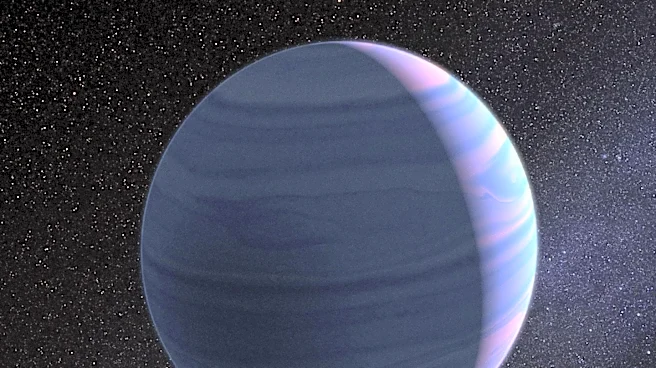
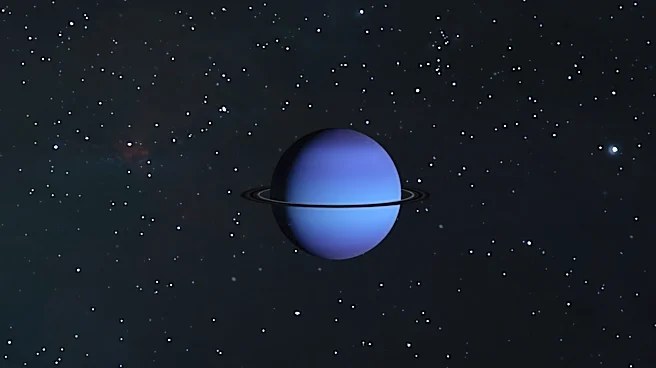
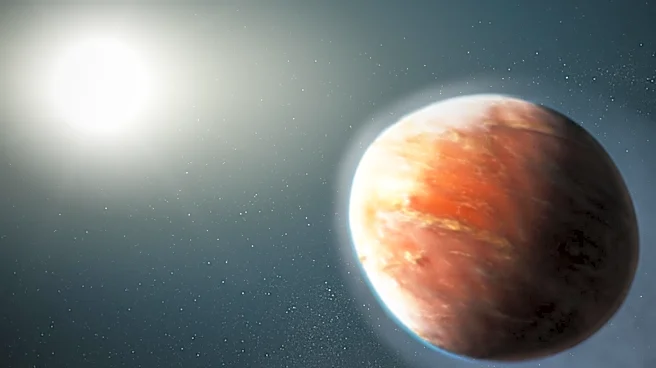
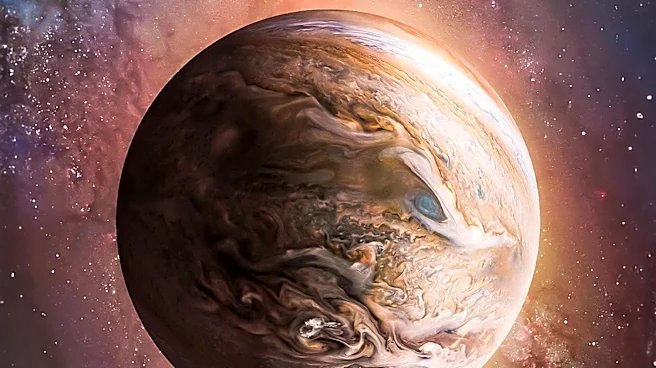
Astronomers have identified two massive exoplanets, described as 'super-puffs,' that are lighter than cotton candy. These planets, comparable in size to Jupiter, were discovered orbiting a star 1,110 light-years away in the southern constellation Volans.
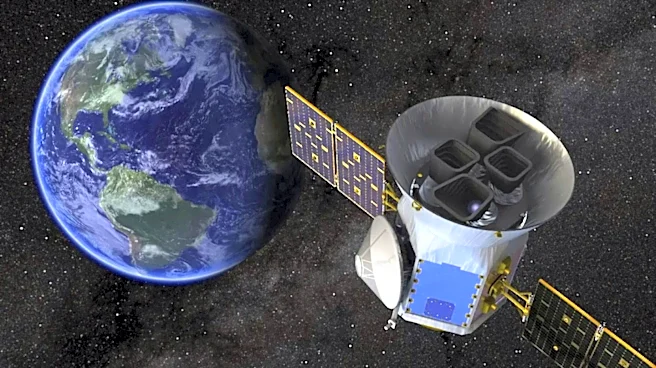
The University of Oxford's George Dransfield and her team reported these findings in the Monthly Notices of the Royal Astronomical Society. The planets have densities similar to shaving foam and are likely composed mostly of hydrogen and helium. Detected by NASA's Tess satellite, these planets are among the lightest known of their size. Their chemical composition will be further studied using NASA's Webb Space Telescope.
Why It's Important?
The discovery of these super-puff planets challenges existing theories of planet formation, particularly regarding how such low-density planets can exist. These findings contribute to the broader understanding of planetary systems and their formation processes. With fewer than 40 known super-puffs among nearly 6,300 confirmed exoplanets, these planets offer a unique opportunity to study rare planetary types. Understanding their formation could provide insights into the conditions and processes that lead to the development of diverse planetary systems, enhancing our knowledge of the universe and our place within it.
What's Next?
Future observations using NASA's Webb Space Telescope are planned to confirm the chemical makeup of these planets. These studies will help determine the exact composition and atmospheric conditions of the super-puffs, providing further insights into their formation and evolution. The scientific community will continue to explore these rare planetary types to solve the puzzle of their existence and to refine models of planetary formation.