




What's Happening?
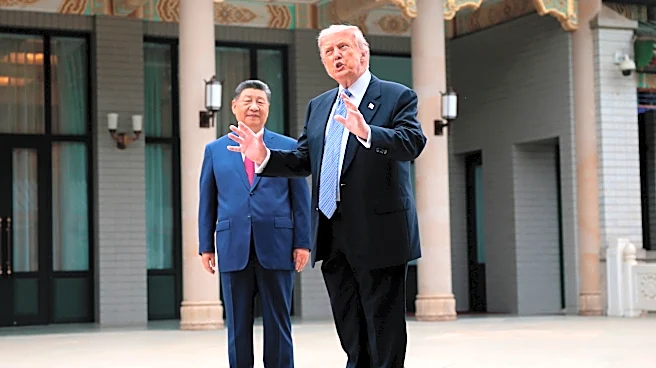
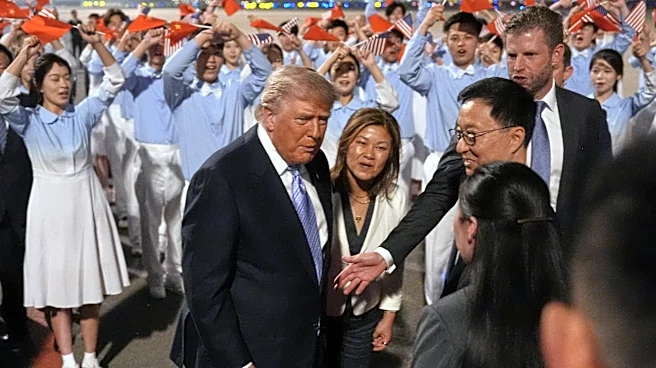
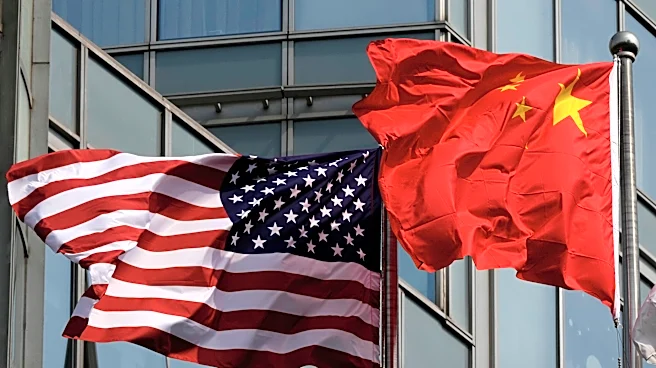
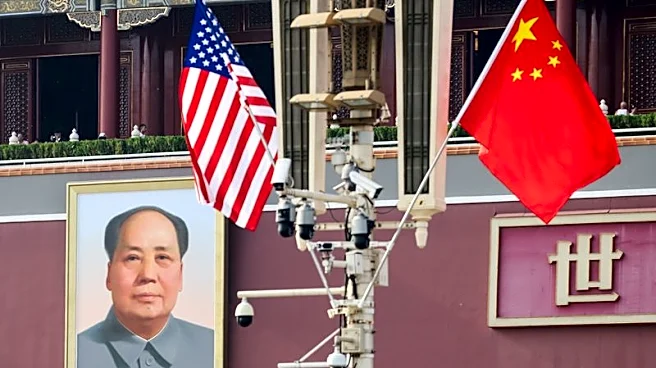
During a recent summit in Beijing between President Trump and Chinese President Xi Jinping, China has pledged to purchase U.S. farm products worth double-digit billions annually over the next three years. This commitment was confirmed by U.S. Trade Representative
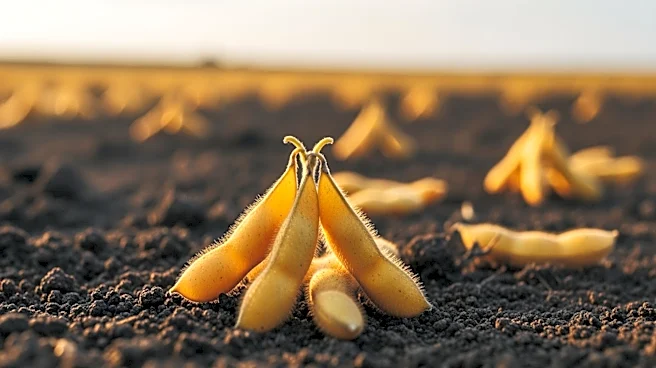
Jamieson Greer. The agreement is expected to cover a range of agricultural goods, not limited to soybeans, and aims to enhance trade relations between the two countries. Despite this development, soybean futures experienced a sharp decline as traders found the details of the deal insufficiently detailed. The summit did not focus heavily on semiconductor export controls, which were anticipated to be a significant topic. The agreement is seen as a potential boost for U.S. agricultural companies like Archer-Daniels-Midland and Bunge Global, which could benefit from resumed Chinese purchases.
Why It's Important?
The commitment by China to significantly increase its purchase of U.S. agricultural products is a critical development in the ongoing trade relationship between the two nations. This move could provide a substantial boost to the U.S. agricultural sector, which has been affected by previous trade tensions and tariffs. The agreement may also help stabilize the market for U.S. farmers and agricultural businesses, potentially leading to increased revenue and job security in the sector. However, the lack of detailed commitments has led to market skepticism, as evidenced by the drop in soybean futures. The summit's limited focus on semiconductor export controls suggests that while agriculture is a priority, broader trade issues remain unresolved, impacting tech investors and companies reliant on U.S.-China trade.
What's Next?
The next steps involve monitoring the implementation of China's purchasing commitments and assessing their impact on the U.S. agricultural market. Stakeholders will be looking for more detailed agreements and assurances to solidify the trade relationship. Additionally, the U.S. and China may need to address other trade issues, such as technology and semiconductor exports, to ensure a comprehensive trade agreement. The agricultural sector will be watching for any tariff reductions that could facilitate increased trade, while tech investors await clarity on export policies that could affect their operations.