




What's Happening?
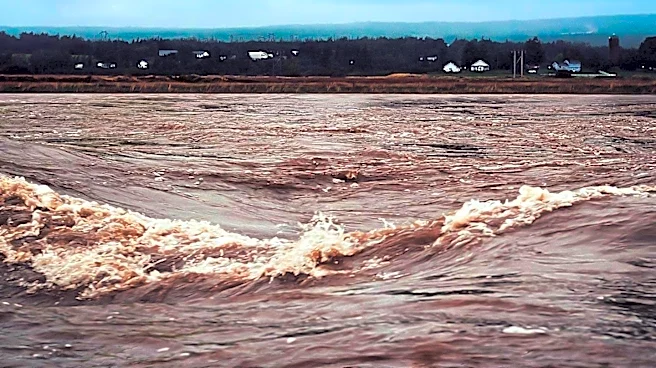
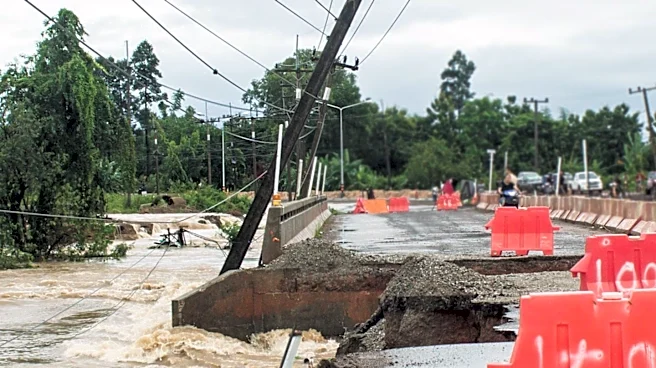
Continuous heavy rain in Lao Cai province, Vietnam, has led to severe flooding affecting 20 communes and wards. The Department of Agriculture and Environment reported that the rains, which began on July 27, have caused extensive damage to homes, agricultural
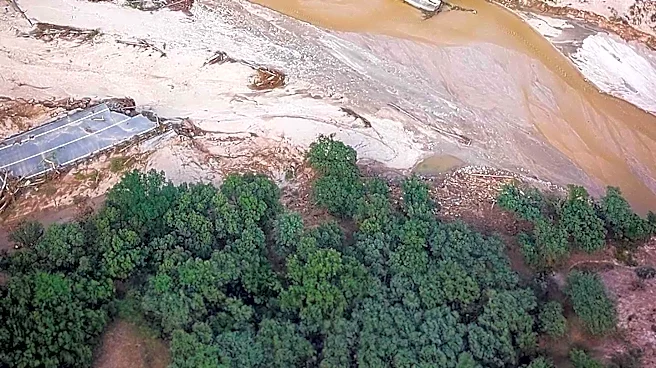
lands, and infrastructure. Seven households were evacuated due to landslide risks, and 35 households, comprising 126 people, were moved to safer locations. The floods have damaged over 156 hectares of agricultural land and aquaculture farms. In Ban Xeo commune, landslides buried sturgeon breeding ponds, resulting in significant losses. The province has recorded over 40,223 cubic meters of landslides, impacting roads and irrigation systems.
Why It's Important?
The flooding in Lao Cai highlights the vulnerability of regions with significant agricultural activities to extreme weather events. The damage to infrastructure and agricultural lands poses a threat to local food security and economic stability. The evacuation of residents underscores the immediate risk to human life and the need for effective disaster management strategies. The situation calls for increased investment in infrastructure resilience and emergency response capabilities to mitigate the impact of such natural disasters.
What's Next?
Authorities are working to clear debris and restore transportation routes. The focus will be on rebuilding damaged infrastructure and providing support to affected communities. Long-term strategies may include enhancing flood defenses and improving early warning systems to better prepare for future events. The government may also need to consider policies that address climate change impacts, which are likely contributing to the increased frequency and severity of such weather events.