





What's Happening?
Friends of the Chicago River is celebrating the 30th anniversary of its Chicago-Calumet River Schools Network, a program that has engaged over 70,000 young people in environmental education. Students, like 17-year-old Jorge Canales Paz from Chicago Academy
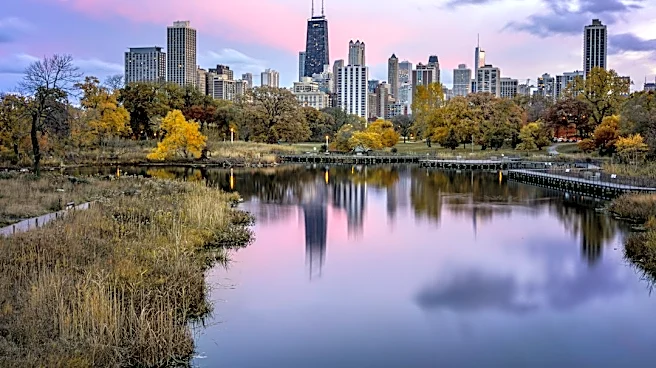
High School, participate in field trips to the Chicago River to learn about water chemistry, riparian habitat, and invasive species removal. This hands-on approach aims to connect students with the river, many of whom have had limited interaction with it despite living nearby. The program provides curriculum for classroom learning before and after field trips and hosts the Chicago-Calumet River Student Congress, where students present on science and nature topics. Mark Hauser, education manager for Friends of the Chicago River, emphasizes breaking down barriers between children and the river to foster a sense of ownership and stewardship. The river itself has seen significant environmental improvements, with fish species increasing from fewer than 10 in the 1970s to over 80 today, largely due to advocacy and improved water quality standards.
Why It's Important?
This initiative is crucial for fostering environmental literacy and stewardship among the youth in the Chicago area. By directly engaging students with the Chicago River, the program cultivates a deeper understanding of ecological principles and the importance of conservation. This hands-on learning experience can inspire future generations to pursue careers in environmental science, advocacy, or urban planning, contributing to the long-term health of urban ecosystems. The program's success in transforming the river from a polluted waterway to a thriving habitat demonstrates the tangible impact of sustained environmental efforts and education. It also highlights the role of community organizations in supplementing formal education, providing practical skills and a sense of civic responsibility that extends beyond the classroom. The increased biodiversity in the Chicago River serves as a powerful example of environmental recovery and the potential for urban natural spaces to flourish with dedicated care.
What's Next?
The Friends of the Chicago River plans to continue adapting its curriculum to address evolving environmental challenges, such as climate change and environmental justice, as noted by executive director Margaret Frisbie. The program will likely seek to expand its reach, engaging more schools and students across the city. Continued advocacy for water quality standards and habitat restoration will remain a priority to sustain the ecological improvements seen in the river. Future initiatives may include developing new educational modules, incorporating advanced technologies for environmental monitoring, and fostering partnerships with other community organizations and scientific institutions. The long-term goal is to ensure that Chicago's youth remain connected to their local environment and are equipped to become effective environmental stewards.
Beyond the Headlines
The transformation of the Chicago River through decades of advocacy and education offers a compelling case study in urban environmental revitalization. It challenges the perception that heavily industrialized urban waterways are beyond repair, demonstrating that dedicated efforts can lead to significant ecological recovery. This success story can serve as a model for other cities grappling with similar environmental issues, illustrating the power of community engagement and sustained conservation initiatives. Furthermore, the program's emphasis on breaking down barriers between urban youth and natural spaces addresses a critical need for equitable access to nature, which has known benefits for physical and mental well-being. By fostering a sense of connection and ownership, the program not only improves the environment but also strengthens community bonds and promotes a more holistic understanding of urban living.