



What's Happening?
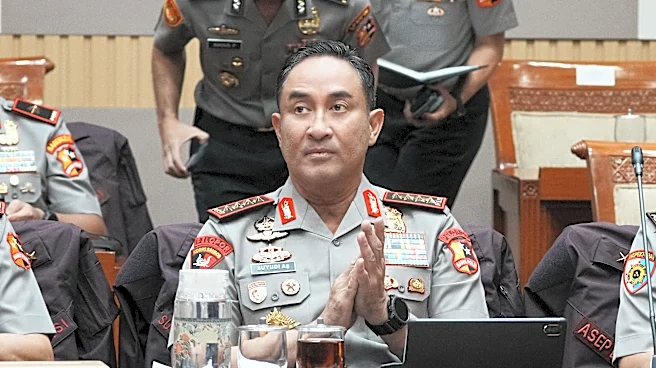
The National Commission on Human Rights (Komnas HAM) in Indonesia has declined to join a government-established working group aimed at resolving serious human rights violation cases. This decision stems from Komnas HAM's insistence on maintaining the
independence of investigative bodies, aligning with international standards for truth, justice, reparation, and non-recurrence for victims. The working group, led by Deputy Coordinating Minister for Law, Human Rights, Immigration, and Corrections Otto Hasibuan, was formed to address a long-standing deadlock between Komnas HAM and the Attorney General's Office. Of 17 serious human rights violation cases investigated by Komnas HAM, only four have proceeded to trial, with the remaining 13 consistently returned by the Attorney General's Office due to perceived incomplete evidence. Coordinating Minister Yusril Ihza Mahendra stated the working group's purpose is to align perceptions and procedures, not to undermine institutional independence. However, Komnas HAM Chairperson Anis Hidayah emphasized that independent investigative authority is crucial for objective evidence gathering and accountability.
Why It's Important?
This development highlights a critical challenge in the pursuit of justice for human rights violations in Indonesia: the persistent procedural and interpretational discrepancies between investigative and prosecutorial bodies. The inability to bring the majority of serious human rights cases to trial, some dating back decades, perpetuates a cycle of impunity and denies victims and their families the justice they seek. The rejection by Komnas HAM, while aimed at preserving its independence, risks further stagnation of these cases if no alternative solutions are presented. The government's initiative to form a working group, despite its good intentions, faces a significant hurdle in gaining the trust and cooperation of key independent institutions. The ongoing deadlock could erode public confidence in the legal system's ability to address past atrocities and prevent future violations, potentially fostering an environment where human rights abuses go unpunished.
What's Next?
The immediate future will likely involve continued efforts by the Coordinating Ministry for Law, Human Rights, Immigration, and Corrections to bridge the gap between Komnas HAM and the Attorney General's Office. Without Komnas HAM's direct participation, the working group's effectiveness in aligning investigative and prosecutorial standards may be limited. Amnesty International Indonesia's Executive Director, Usman Hamid, suggests Komnas HAM should adopt a more tactical approach, participating with specific conditions, such as guarantees from the President regarding military and police cooperation and access to classified intelligence documents. Additionally, a decree from the Attorney General granting Komnas HAM investigators coercive powers for summons and evidence seizure is deemed crucial. If these issues are not resolved, the 13 stalled cases, including those from the 1965-1966 mass killings and the 1998 May riots, risk remaining in legal limbo, further entrenching impunity and diminishing hope for justice.
Beyond the Headlines
The impasse between Komnas HAM and the Attorney General's Office reflects a deeper systemic issue concerning the rule of law and accountability for human rights violations in Indonesia. The historical context of these unresolved cases, some involving state actors, underscores the difficulty of achieving justice in transitional democracies. The debate over institutional independence versus inter-agency cooperation touches upon fundamental principles of governance and human rights protection. The outcome of this situation could set a precedent for how future human rights abuses are addressed, influencing the country's commitment to international human rights norms. The continued failure to prosecute these cases not only impacts the victims but also risks undermining the legitimacy of democratic institutions and fostering a culture where human rights are not adequately safeguarded.