
What's Happening?
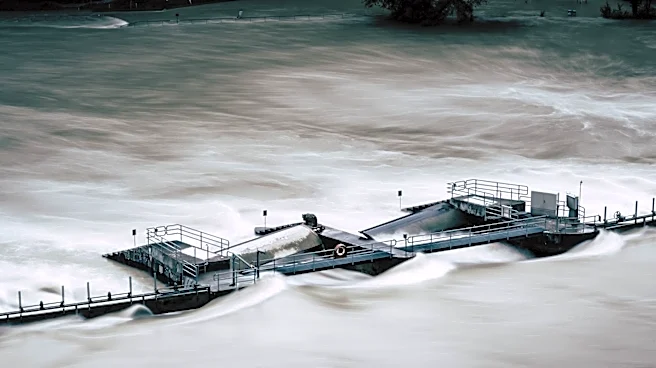
Heavy rains have caused severe flooding across central and southern Chile, resulting in the deaths of 13 people and leaving seven others missing. The storms have led to widespread damage, including the destruction
of 81 homes and significant damage to 2,761 others. Approximately 2,281 people have been displaced, and 87,000 remain without electricity. The Chilean government has declared a state of emergency and is considering sanctions against electricity distributors for delays in restoring power. The flooding has also disrupted schools and some mining operations, although major copper and lithium mines in the northern regions remain unaffected. Authorities warn of continued risks as waterways and riverbanks remain vulnerable to rising water levels.
Why It's Important?
The flooding in Chile highlights the country's vulnerability to extreme weather events, which can have devastating impacts on communities and infrastructure. The loss of life and displacement of thousands underscore the urgent need for effective disaster response and infrastructure resilience. The government's decision to potentially sanction electricity distributors reflects the critical importance of reliable power supply during emergencies. The disruption to schools and mining operations also points to the broader economic and social impacts of such natural disasters. This event may prompt Chile to invest more in climate adaptation and infrastructure improvements to better withstand future weather-related challenges.