




What's Happening?
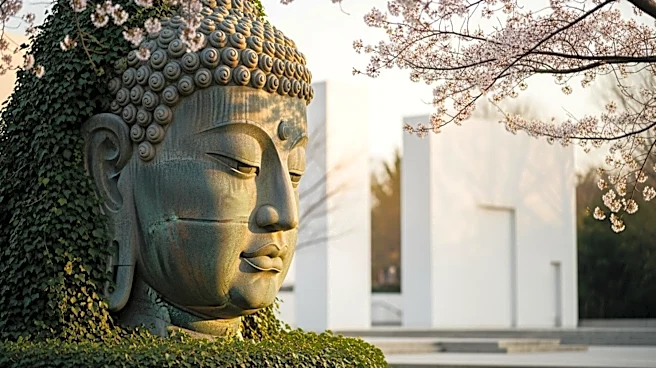
A 27-foot-tall Buddha statue, titled 'The Light That Shines Through the Universe,' has been installed on the High Line in New York City. Created by artist Tuan Andrew Nguyen, the sculpture is part of the High Line Plinth program and will be on display
from April 2026 to Fall 2027. The statue is a recreation of one of the Bamiyan Buddhas destroyed by the Taliban in 2001, serving as a symbol of cultural loss and resilience. The sculpture, carved in Vietnam, replaces the previous Plinth installation, a giant pigeon sculpture. The work is not an exact replica but an 'echo' of the original, with hands cast from melted-down brass artillery shells, symbolizing healing and empathy. The installation aims to evoke the memory of the lost cultural relics and highlight ongoing humanitarian issues.
Why It's Important?
The installation of this sculpture on the High Line is significant as it serves as a powerful reminder of cultural resilience in the face of destruction. By recreating a monument destroyed by the Taliban, the artwork underscores the importance of preserving cultural heritage and the impact of its loss. The use of melted-down artillery shells to form the Buddha's hands also draws attention to the legacy of war and violence, particularly in Vietnam, where unexploded ordnance remains a threat. This piece not only commemorates the past but also encourages reflection on current global issues of cultural erasure and conflict. It provides a platform for dialogue and education through associated events, such as lectures and meditation sessions, fostering a deeper understanding of cultural and historical contexts.
What's Next?
The High Line will host a series of free monthly lectures and guided meditation sessions at the Plinth from May through October. These events, in partnership with the Rubin Museum of Himalayan Art, will cover topics such as Buddhist mudras, healing rituals, and the history of Buddhism along the Silk Road. This educational series aims to engage the public with the themes of the sculpture, offering opportunities for reflection and learning. The installation will remain a focal point for visitors to the High Line, contributing to ongoing discussions about cultural preservation and resilience.
Beyond the Headlines
The sculpture's presence on the High Line highlights broader themes of transformation and healing. By repurposing symbols of violence into expressions of hope, the artwork challenges viewers to consider the potential for renewal in the aftermath of destruction. It also raises awareness of the ongoing impact of historical conflicts, such as the Vietnam War, on contemporary societies. The installation serves as a testament to the enduring power of art to inspire change and foster connections across cultures and generations.