





What's Happening?
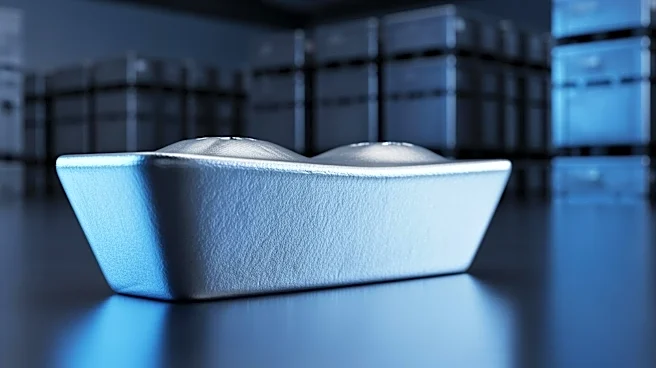
The share of Russian-origin aluminum in London Metal Exchange (LME) warehouses increased to 93% in May, up from 72% in April. This rise is attributed to traders withdrawing Indian metal, which led to a decrease in available Indian stocks by 71,750 tons.
The total available aluminum inventories on the LME fell by 23% to 254,625 metric tons, marking the lowest level since May 2025. Despite a decrease in absolute terms, Russian aluminum stocks fell by 3,950 tons to 237,175 tons, but its share rose due to the steeper drop in Indian stocks. The withdrawal of Indonesian aluminum also contributed to the dominance of Russian metal. The increase in Russian aluminum's share comes amid production and logistical constraints in the Middle East, tightening global supply. Traders continue to avoid Russian metal produced after April 13, 2024, due to Western sanctions, although material produced before this date remains tradable.
Why It's Important?
The dominance of Russian aluminum in LME stocks highlights ongoing geopolitical tensions and their impact on global trade. The increase in Russian aluminum's share, despite sanctions, suggests that traders are navigating complex supply chain challenges. This situation underscores the influence of geopolitical factors on commodity markets, potentially affecting pricing and availability. The withdrawal of Indian and Indonesian metals indicates shifting trade dynamics, which could have broader implications for global supply chains. The constraints in the Middle East further exacerbate supply issues, potentially leading to increased prices and affecting industries reliant on aluminum. The situation also reflects the challenges faced by traders in balancing compliance with sanctions and meeting market demands.