



What's Happening?
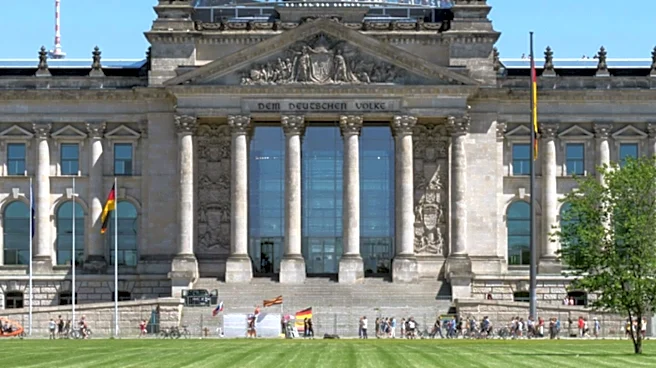
Germany is undergoing a significant strategic transformation in its defense policy, moving from a historically cautious approach to a more robust military commitment. Chancellor Friedrich Merz announced on July 3 that Germany will double its defense budget
within four years. This commitment is reflected in the projected increase of Berlin’s defense spending as a percentage of GDP, rising from 1.43% in 2021 to an estimated 2.69% for 2026. The German government has also pledged to increase the defense budget to €162 billion ($189 billion) by 2029, aiming to exceed 3% of GDP. This trajectory is set to achieve the minimum 3.5% of GDP on core defense requirements by 2035, a commitment formalized by NATO allies in the 2025 NATO Hague Summit Declaration. This shift was spurred by Russia's aggression in Ukraine and demands from the Trump administration for increased defense contributions from NATO members. In 2022, Germany established a €100 billion (approximately $113 billion) special defense fund, accelerating procurement across various combat domains, including air defense, armored vehicles, maritime, and cyber capabilities.
Why It's Important?
Germany's substantial increase in defense spending and its commitment to meeting NATO targets represent a pivotal moment for European security and the transatlantic alliance. As Europe's largest economy, Germany's enhanced military capabilities will significantly strengthen NATO's collective defense, particularly in the face of growing threats from the 'Axis of Aggressors' (China, Russia, Iran, and North Korea). This move addresses long-standing concerns from the U.S. and other allies about burden-sharing within NATO. The accelerated procurement and investment in Germany's defense industrial base, involving companies like Rheinmetall and TKMS, will not only bolster European security but also create opportunities for industrial partnerships with American companies. These collaborations, such as Rheinmetall's joint ventures with U.S. partners for artillery munitions and ATACMS, will strengthen the American defense industrial base and enhance the alliance's capacity for sustained, high-intensity conflict. Furthermore, Germany's decision to permanently station a combat brigade in Lithuania signifies a fundamental shift in its strategic culture, demonstrating a commitment to forward deterrence on NATO's eastern flank, a move that carries significant geopolitical weight and sends a clear message to potential adversaries.
What's Next?
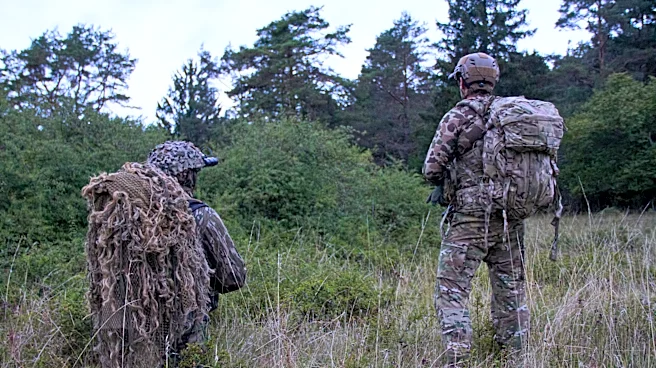
Germany will continue to implement its ambitious defense spending plan, working towards the goal of 3.5% of GDP on defense by 2035. This will involve sustained investment in procurement across all combat domains and further strengthening its defense industrial base. The partnerships between German and American defense companies are expected to deepen, leading to increased co-production arrangements and technological exchange. The permanent deployment of the 45th Armored Brigade in Lithuania will solidify Germany's role in forward deterrence and contribute to the security of NATO's eastern members. Washington is expected to continue to encourage and celebrate Germany's increased defense contributions, recognizing their importance for transatlantic unity and shared security burdens. While disagreements between Washington and Berlin may arise, the focus will remain on ensuring these do not derail Germany's growing defense investments and the overall transatlantic cooperation. The ongoing review of U.S. force posture in Europe will likely continue to emphasize the need for European allies to take primary responsibility for their defense, with Germany leading by example.
Beyond the Headlines
Germany's strategic transformation marks a profound departure from its post-World War II foreign policy, which was characterized by military restraint and a focus on economic power. This shift, driven by geopolitical realities, particularly Russia's actions, signifies a re-evaluation of national identity and responsibility on the global stage. The decision to permanently deploy combat forces outside its borders for the first time since World War II carries immense symbolic weight, signaling a new era of German military engagement and leadership within Europe. This evolution could reshape the political landscape of the European Union, with Germany potentially assuming a more prominent role in security and defense matters. The increased defense spending also presents an ethical dilemma for some segments of German society, which have historically been wary of militarization. However, the current geopolitical climate appears to have fostered a broader consensus on the necessity of a stronger defense. This transformation will likely have long-term implications for Germany's domestic politics, its relationship with its European neighbors, and its standing as a global power.