






What's Happening?
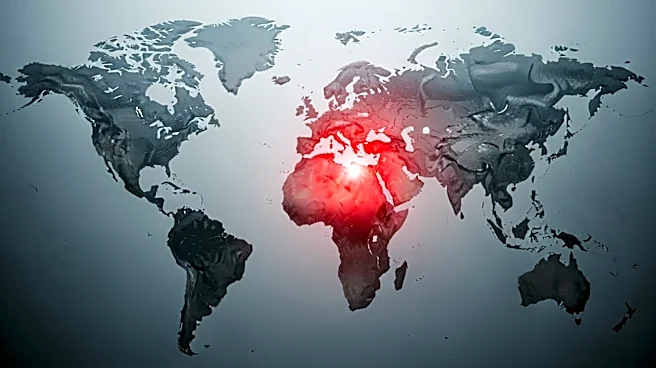
The International Monetary Fund (IMF) has issued a warning regarding the potential economic impact on the United Kingdom due to ongoing military operations in the Middle East. The conflict, which began in late February, has disrupted oil and gas exports
from the region, leading to significant energy price shocks. As a net importer of energy, the UK is particularly vulnerable to these disruptions. The IMF has revised its growth forecast for the UK, predicting a growth rate of just 0.8% in 2026, down from an earlier forecast of 1.3%. This revision comes as the UK economy showed a 0.5% growth in February, surpassing expectations. However, economists caution that this growth is likely to be overshadowed by the current geopolitical tensions.
Why It's Important?
The IMF's warning highlights the broader implications of geopolitical conflicts on global economies, particularly those heavily reliant on energy imports. For the UK, the conflict in the Middle East poses a significant threat to economic stability, potentially leading to increased inflation and interest rate hikes. The Bank of England, which had anticipated cutting interest rates, may now be forced to reconsider its monetary policy in response to rising inflation, expected to reach 3.3% in March. This situation underscores the interconnectedness of global markets and the ripple effects that regional conflicts can have on national economies.
What's Next?
The Bank of England is expected to closely monitor the situation and may adjust its interest rate policy in response to the evolving economic landscape. The next inflation data release on April 22 will be crucial in determining the bank's course of action. Economists are divided on whether the bank will implement a 25 or 50 basis point hike by the end of the year. The ongoing uncertainty and potential for further geopolitical developments will likely influence future economic forecasts and policy decisions.