
What's Happening?
The mayors of Phoenix, Paris, and Milan are collaborating to address the escalating urban heat crisis, sharing strategies to protect residents from extreme temperatures. This collaboration emerged during
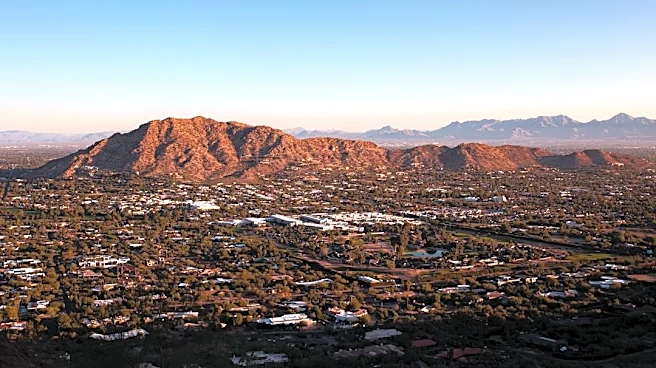
a heatwave in London, where mayors compared their cities' approaches to preparing for extreme heat, protecting vulnerable residents, communicating risk, and redesigning urban environments. For Phoenix, managing extreme heat has been a long-standing challenge, leading to the establishment of one of the world's first city offices dedicated to heat response and mitigation. This office focuses on immediate relief and long-term resilience through cooling solutions, such as requiring 75% shade coverage in new developments and applying cool surface treatments to buildings and roadways. Paris and Milan, historically designed for different climates, are now adapting by creating 'cool spots' within a seven-minute walk for every resident, extending park hours, and mobilizing climate volunteers. Milan is also expanding its 'Piazze Aperte' (Open Squares) program to integrate cool spaces by planting trees and replacing hard surfaces with green areas.
Why It's Important?
This international collaboration among major cities like Phoenix, Paris, and Milan is critically important as extreme heat becomes an increasingly familiar and deadly consequence of climate change. With extreme heat claiming over half a million lives annually, cities are particularly vulnerable due to the urban heat island effect. The shared learning and adaptation strategies are vital for developing effective public health measures and urban planning policies. Phoenix's decades of experience provide valuable insights for European cities now grappling with unprecedented heat. The initiatives, such as creating cool spaces, implementing shade requirements, and developing early warning systems, are not just climate policies but also investments in public health, local economies, and overall liveability. This cross-city knowledge exchange through networks like C40 Cities demonstrates a proactive approach to a global challenge, aiming to save lives and reduce future costs by building more resilient urban environments.
What's Next?
The collaboration among these mayors is expected to continue fostering the exchange of best practices and innovative solutions for urban heat adaptation. Cities will likely further refine their strategies based on shared experiences, potentially leading to the widespread adoption of successful initiatives like Phoenix's heat response office or Paris's 'cool spots' network. There will be continued efforts to integrate climate adaptation into urban planning, transport, housing, and public health policies. The call for national governments to work more closely with cities, providing necessary funding and flexibility, suggests a push for more coordinated, multi-level governance in addressing climate impacts. This ongoing dialogue and implementation of strategies will be crucial in mitigating the health and economic consequences of rising temperatures, ensuring cities are better prepared for future heatwaves and the long-term effects of climate change.
Beyond the Headlines
The collaborative efforts of these mayors highlight a profound shift in urban governance, where climate change is no longer viewed solely as an environmental issue but as a multifaceted crisis demanding integrated solutions across public health, infrastructure, and social equity. The focus on protecting vulnerable populations—older residents, young children, outdoor workers, and lower-income communities—underscores the ethical imperative of climate action. This initiative also challenges traditional notions of urban design, pushing cities to rethink their physical landscapes to prioritize human well-being in a hotter world. The idea that 'good ideas should travel' reflects a growing global consciousness and the recognition that local actions have collective impact. This collaborative model could set a precedent for addressing other global challenges, demonstrating how cities can lead in developing practical, impactful solutions when national governments may be slower to act.