



What's Happening?
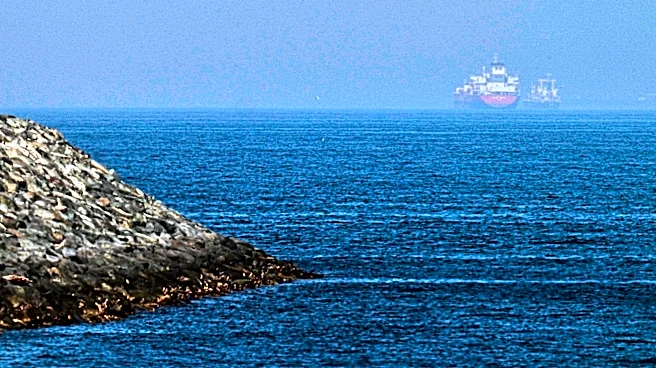
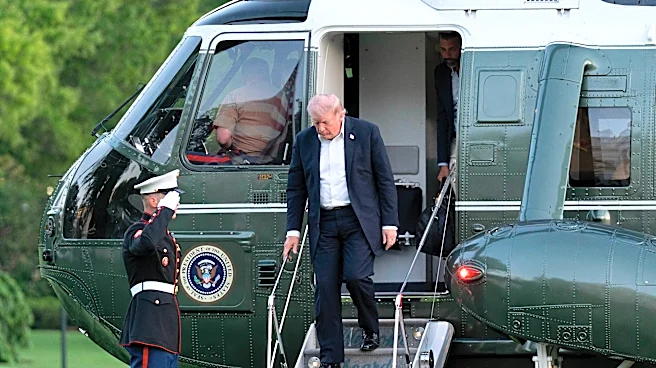
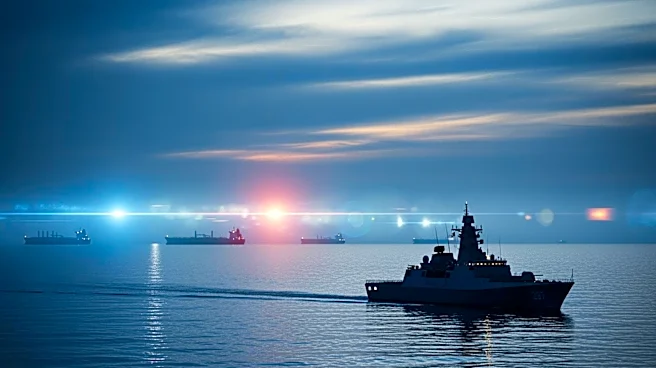
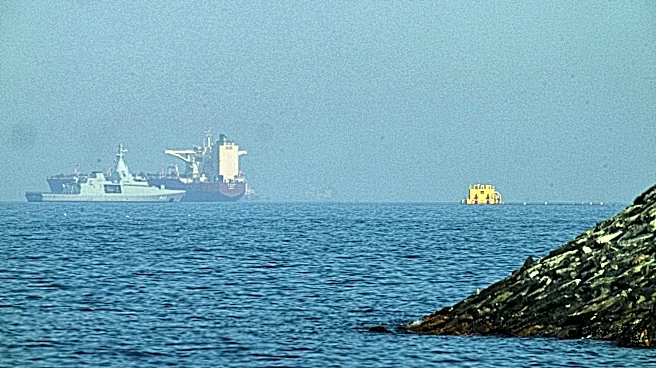
President Donald Trump has announced a U.S. initiative to guide stranded ships from the Strait of Hormuz, a critical waterway affected by the ongoing conflict between the U.S., Israel, and Iran. The initiative, dubbed 'Project Freedom,' aims to assist
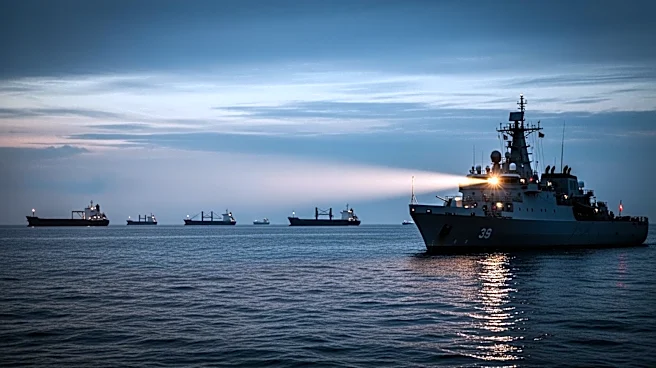
hundreds of vessels and approximately 20,000 seafarers trapped in the Persian Gulf due to Iran's effective closure of the strait. The U.S. Central Command will deploy guided-missile destroyers, aircraft, and service members to facilitate this effort. Iran has criticized the move, labeling it a ceasefire violation, and has asserted control over the strait, demanding tolls from non-U.S. or Israeli ships. The situation remains tense, with recent attacks on cargo ships near the strait highlighting the risks involved.
Why It's Important?
The Strait of Hormuz is a vital passage for global oil and natural gas trade, and its closure has significant implications for international markets. President Trump's initiative seeks to alleviate the economic impact by ensuring safe passage for stranded ships, potentially stabilizing oil prices and supply chains. However, the move risks escalating tensions with Iran, which views the U.S. actions as aggressive and a violation of the ceasefire. The situation could affect diplomatic relations and lead to further military confrontations, impacting global security and economic stability.
What's Next?
The U.S. plans to begin 'Project Freedom' on Monday, with discussions ongoing between U.S. representatives and Iran. The initiative's success depends on Iran's response and the ability to maintain the fragile ceasefire. Shipping companies face potential sanctions for paying Iran to transit the strait, adding complexity to the situation. The international community will closely monitor developments, as any interference could lead to military action, further affecting global trade and diplomatic relations.