




What's Happening?
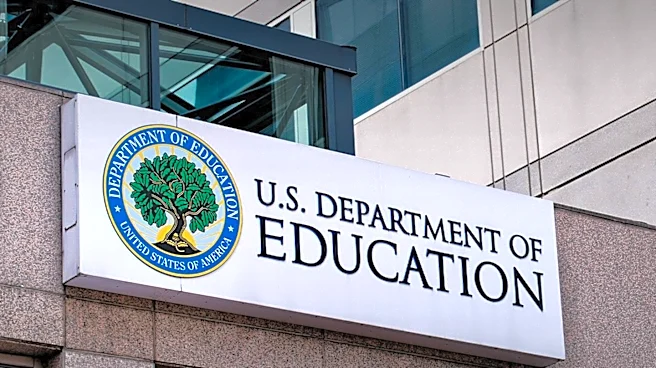
House Republicans are pursuing legislation to transfer key responsibilities of the U.S. Department of Education to other federal agencies. This effort is part of a broader initiative to dismantle the department, a goal that aligns with the Trump administration's
previous attempts. The House Education and Workforce Committee is set to review ten bills that would formalize interagency agreements signed by Education Secretary Linda McMahon. These agreements aim to redistribute the department's programming and personnel. However, education lawyers warn that such a transition would be chaotic for states, school districts, and higher education institutions. The complete elimination of the department would require an act of Congress, making the realization of these plans uncertain.
Why It's Important?
The proposed changes could significantly impact the administration of federal education programs across the United States. If implemented, the redistribution of responsibilities could lead to confusion and disruption in how educational services are delivered at the state and local levels. This move could affect funding, policy implementation, and accountability measures that currently fall under the Department of Education's purview. Stakeholders such as educators, administrators, and policymakers may face challenges in adapting to new administrative structures. The potential dismantling of the department also raises questions about the future of federal oversight in education and the role of the federal government in ensuring educational equity and access.
What's Next?
The House Education and Workforce Committee will proceed with marking up the proposed bills. However, given the complexity and potential disruption of the plan, it is uncertain whether the legislation will gain the necessary support to pass through Congress. Stakeholders, including state education departments and advocacy groups, are likely to engage in discussions and lobbying efforts to influence the outcome. The debate over the role of the federal government in education is expected to continue, with potential implications for future policy directions and educational priorities.