





What's Happening?
Florida Education Commissioner Henry Mack has issued a directive calling on school districts to proactively review library and classroom books, rather than waiting for parental objections. Mack's seven-page memorandum, sent to superintendents and charter
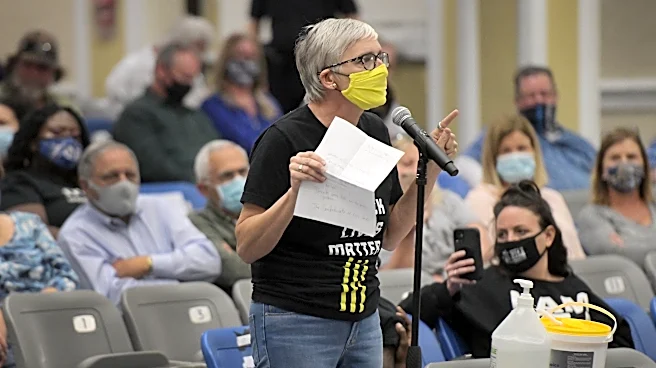
school leaders across Florida, specifically highlights Hillsborough County, where parents have repeatedly raised concerns about books containing sexually explicit material. The commissioner recommends that districts compare their existing collections against a statewide list of books that have been removed or discontinued elsewhere in Florida following objections. However, Mack clarifies that a book's appearance on this list does not automatically mandate its statewide ban. He argues that relying on parents to discover potentially inappropriate material signifies a failure in the district's responsibility to review its own collections. PEN America and Florida Freedom to Read have expressed concerns that this approach could broaden the impact of individual book objections, potentially leading to unnecessary restrictions on students' access to books.
Why It's Important?
This directive from Commissioner Mack signifies a significant shift in how book challenges are handled within Florida's public school system, moving from a reactive to a proactive review process. The emphasis on districts auditing their own collections and comparing them against a statewide list could lead to a more uniform, albeit potentially more restrictive, approach to book availability across the state. For students, this could mean a reduction in the diversity of available reading materials, impacting their exposure to different perspectives and literary works. For educators and librarians, it introduces new responsibilities and potential pressures in curating collections, with the risk of state intervention if compliance is not met. The involvement of organizations like PEN America highlights the broader national debate surrounding censorship, intellectual freedom, and parental rights in education, making Florida a key battleground in these discussions.
What's Next?
Commissioner Mack has recommended a 90-day plan for districts to significantly expand their examination of collections, including auditing existing books, inventorying classroom libraries, and scrutinizing donations and book fair materials. Districts are also advised to prioritize books that have already been removed or discontinued elsewhere in Florida. A 30-day timeline for full-text reviews of flagged books is also part of the recommendation. The Florida Department of Education will continue to maintain and update its report of materials removed or discontinued by districts, which other districts are encouraged to use for consideration. The Department of Education can investigate credible allegations of non-compliance, and the State Board of Education may impose corrective measures, including withholding funding, if a district is found unwilling or unable to comply. DOE staff are also tasked with developing recommendations for strengthening State Board rules governing school library audits and district reporting.
Beyond the Headlines
The Florida Commissioner's call for proactive book reviews delves into the complex interplay between local control, state oversight, and the fundamental principles of intellectual freedom in education. While the stated aim is to ensure age-appropriate materials and address parental concerns, the potential for a chilling effect on diverse literature and critical thinking is a significant underlying implication. The statewide list, even if not a direct ban, could serve as a de facto guide for removals, leading to a homogenization of school library offerings. This situation could also exacerbate the ongoing debate about the role of public education in shaping societal values versus providing a broad and inclusive learning environment. The ethical considerations of pre-emptively removing books based on objections from other districts, rather than local community standards, raise questions about due process and the professional autonomy of educators and librarians.