



What's Happening?
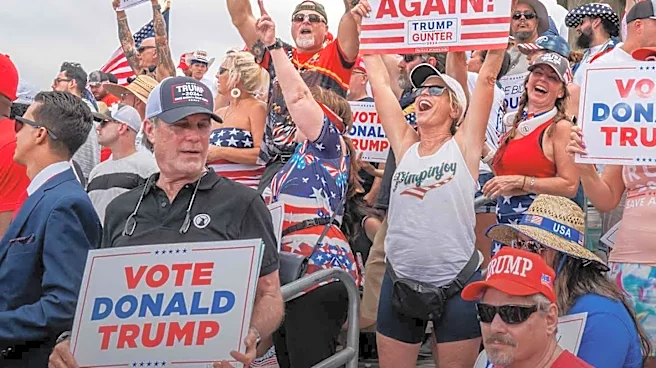
A recent HarrisX poll indicates that 'Make America Great Again' (MAGA) supporters are the most enthusiastic voting bloc ahead of the 2026 midterm elections. The survey, conducted between July 9 and 10, involved 1,019 registered voters and found that 75%
of MAGA respondents are 'definitely going to vote' in the upcoming elections. This level of enthusiasm surpasses that of traditional Republicans at 70% and Democrats at 63%. The poll also revealed that 85% of Trump/MAGA Republicans are likely to vote, combining those who are 'definitely going to vote' and 'probably going to vote'. In contrast, 78% of Democrats and traditional Republicans, and 63% of Independents expressed similar intentions. Despite the high enthusiasm among MAGA supporters, the poll found that more participants would choose a Democratic candidate over a Republican if the election were held today, with 52% leaning towards Democrats and 47% towards Republicans.
Why It's Important?
The findings of this poll are significant as they highlight the potential voter turnout dynamics for the 2026 midterm elections. High enthusiasm among MAGA supporters could translate into a strong turnout, potentially impacting the balance of power in Congress. The midterms will determine whether President Trump's GOP retains control of Congress or if the Democratic Party can regain influence. Enthusiasm levels are crucial as they often predict voter turnout, which can influence the ability of a party to implement policy changes. The poll also suggests a competitive political landscape, with a slight edge for Democrats in voter preference, indicating a possible shift in voter sentiment since the 2024 presidential election.
What's Next?
As the 2026 midterms approach, both parties are likely to intensify their efforts to mobilize voters. The GOP may focus on maintaining the enthusiasm of MAGA supporters, while Democrats might aim to convert their slight lead in voter preference into actual votes. Campaign strategies will likely target undecided voters and those less likely to participate, such as Independents and Democrats who expressed lower voting intentions. The outcome of these efforts could significantly influence the legislative agenda and the political climate in the U.S. over the next few years.