




What's Happening?
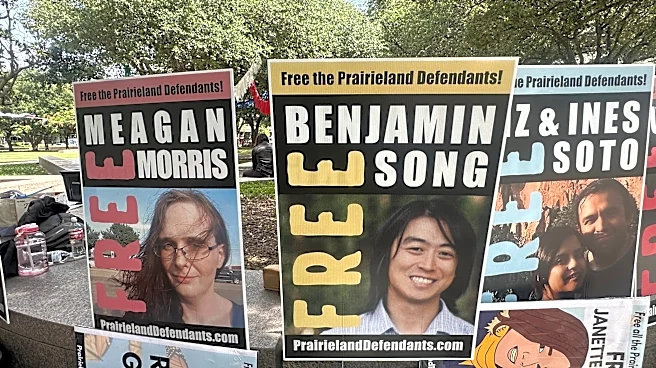
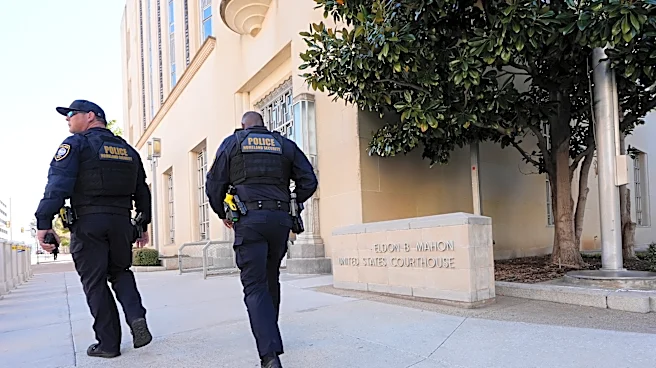
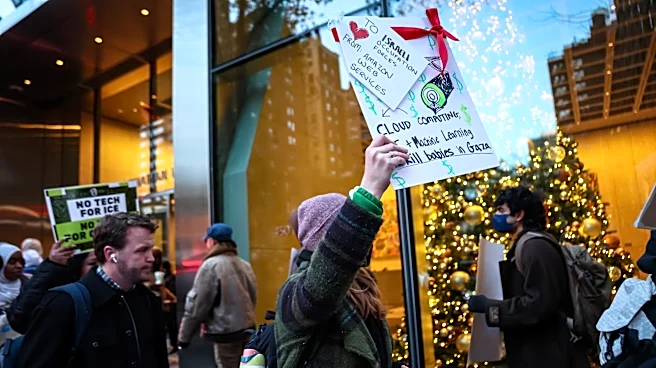
In a significant legal development, nine protesters have been sentenced to unusually long prison terms ranging from 30 to 100 years by two federal courts. These individuals were arrested following a demonstration outside a migrant detention facility in Texas,
during which a police officer was shot and injured. The Justice Department has accused the protesters of being affiliated with Antifa, a far-left movement. This case marks the first application of a presidential declaration labeling Antifa as a domestic terrorist organization, despite the lack of a formal federal charge for domestic terrorism. The sentences are notably harsher than those given to individuals involved in the January 6 Capitol riot, who received pardons or commutations from President Trump.
Why It's Important?
The sentencing of these protesters highlights a broader crackdown on dissent and raises questions about the application of justice in politically charged cases. The harsh sentences have sparked debate over the use of domestic terrorism labels and their impact on free speech and protest rights. Critics argue that such measures could deter legitimate protest activities and infringe on First Amendment rights. The case also underscores the ongoing tension between law enforcement and protest movements, particularly those opposing government policies on immigration and other issues. The Justice Department's approach may set a precedent for future cases involving political protests.
What's Next?
The legal and political implications of this case are likely to unfold as appeals and further legal challenges are anticipated. The sentences may prompt civil rights organizations to advocate for policy changes and legal reforms to protect protest rights. Additionally, the case could influence future law enforcement strategies and government policies regarding domestic protest movements. The broader societal response, including potential protests or public outcry, could shape the national discourse on civil liberties and government accountability.
Beyond the Headlines
This case raises deeper questions about the balance between national security and civil liberties. The use of terrorism labels for domestic groups, particularly those without formal organizational structures, challenges existing legal frameworks and could lead to calls for legislative clarity. The ethical implications of labeling political dissent as terrorism may also provoke discussions on the role of government in regulating protest activities and the potential for abuse of power. Long-term, this development could influence cultural perceptions of protest movements and their legitimacy.