


What's Happening?
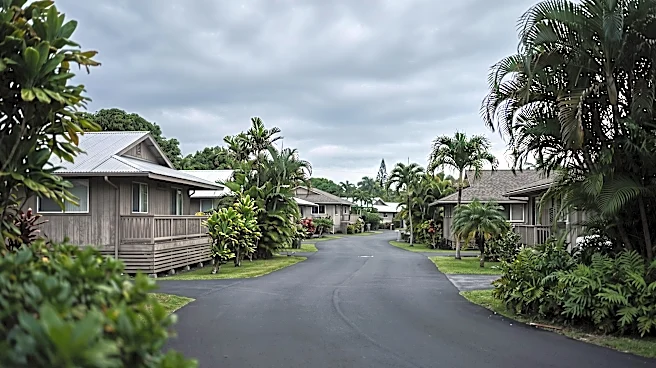
Hawaii Island police are requesting public assistance to locate Brandon Cranfield, a 29-year-old man reported missing and endangered. Cranfield was last seen on August 28 at approximately 11 a.m. in the 75-5000 block of Alahou Street in Kailua-Kona. Authorities
describe Cranfield as being 6 feet, 4 inches tall, weighing about 300 pounds, with medium-length blond hair and blue eyes. The police are urging anyone who may have seen Cranfield or possesses information that could aid in safely locating him to contact 911 or the Hawaii Police Department’s non-emergency line at 808-935-3311.
Why It's Important?
The disappearance of Brandon Cranfield is a serious concern for his family and the Kailua-Kona community, highlighting the critical role of public cooperation in missing persons cases. When an individual is reported as 'endangered,' it suggests there are specific concerns for their well-being, making timely location efforts paramount. The public's ability to provide information, even seemingly minor details, can be crucial in assisting law enforcement. This situation underscores the importance of community vigilance and the effectiveness of public appeals in mobilizing resources and information to help resolve such cases, potentially preventing harm or providing closure to affected families.
What's Next?
Hawaii Island police will continue their active search for Brandon Cranfield, relying heavily on any leads provided by the public. They will likely follow up on all tips received and may expand their search area if initial efforts prove unsuccessful. The police department will maintain communication with Cranfield's family and the community, providing updates as new information becomes available. The immediate next step is to disseminate his description widely and encourage continued public engagement to increase the chances of a safe recovery.
Beyond the Headlines
Beyond the immediate search, this incident brings to light the broader issue of missing persons and the emotional toll it takes on families and communities. The 'endangered' status often implies underlying vulnerabilities, such as health issues, mental health challenges, or potential foul play, which are not explicitly detailed in the report but are inherent concerns in such cases. It also highlights the reliance of law enforcement on community partnerships and the power of collective action in times of crisis. The case serves as a reminder of the importance of community support networks and resources for individuals who may be at risk of going missing.