


What's Happening?
Patricia E. Harris, CEO of Bloomberg Philanthropies, has emphasized the critical role of ocean protection in the fight against climate change. She notes that billions of people depend on the ocean for food and income, and the ocean acts as a vital carbon
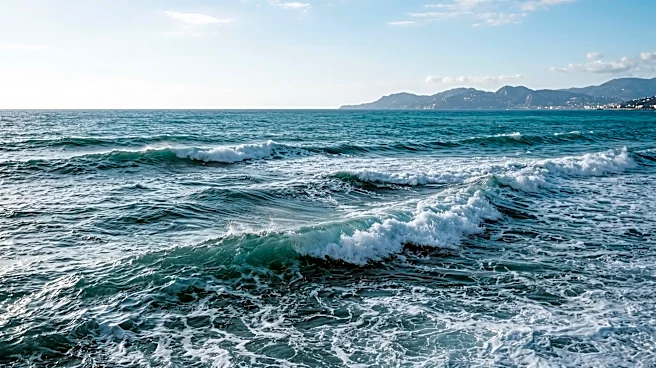
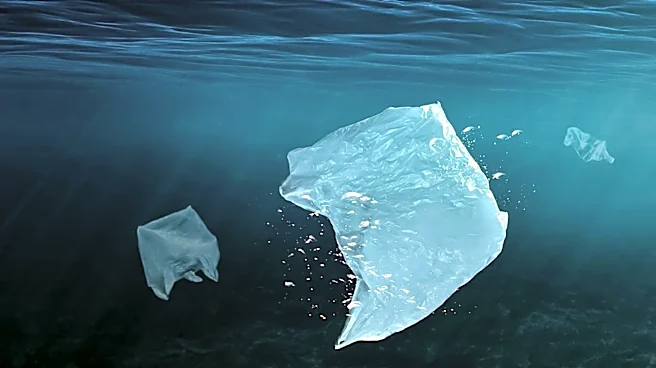
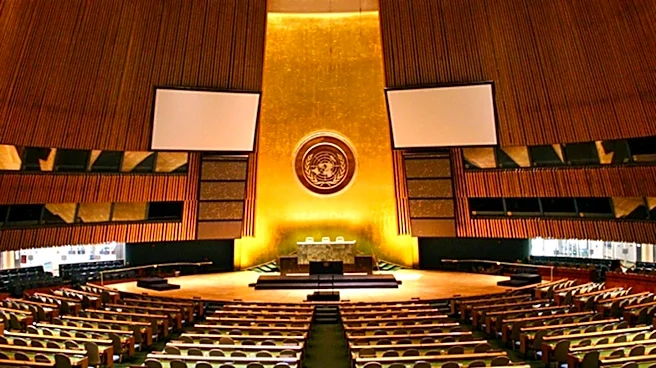
sink. In January, the U.N. will host its first-ever Conference of Parties to the global High Seas Treaty, which recently came into effect. This treaty provides a legal framework for countries to establish protected ocean areas beyond national borders. Governments have pledged to protect 30% of the ocean by 2030, but currently, only 10% is legally protected, and even less is effectively enforced. Harris views the upcoming U.N. Ocean COP as a crucial opportunity to increase protected areas, strengthen enforcement mechanisms, and improve progress measurement, advocating for better data and transparency, supported by organizations like Global Fishing Watch and the High Seas Alliance.
Why It's Important?
For the U.S., the protection of oceans is paramount due to its extensive coastlines, significant maritime industries, and vulnerability to climate change impacts. The U.S. economy relies heavily on healthy oceans for fisheries, tourism, and trade. Stronger international agreements, such as the High Seas Treaty, can help safeguard marine biodiversity and critical ecosystems that provide essential services, including carbon absorption and coastal protection. Increased protected areas and enforcement mechanisms would directly benefit U.S. efforts to manage its own marine resources sustainably and combat illegal fishing. Furthermore, the emphasis on data and transparency aligns with U.S. scientific and environmental policy goals, enabling more effective monitoring and management of ocean health. Failure to act could lead to further degradation of marine environments, impacting U.S. economic stability, food security, and environmental resilience.
What's Next?
The U.N. will hold its first-ever Conference of Parties to the global High Seas Treaty in January. This conference is expected to be a pivotal moment for countries to agree on more protected ocean areas, establish stronger enforcement mechanisms, and develop better measures of progress. The focus will be on translating the legal framework of the treaty into concrete actions. Organizations like Bloomberg Philanthropies will continue to support initiatives that provide data and promote transparency to aid these efforts. The goal is to accelerate progress towards the collective pledge of protecting 30% of the ocean by 2030, ensuring that rules are effectively enforced and that the ocean's role in climate mitigation is maximized.
Beyond the Headlines
The High Seas Treaty and the upcoming U.N. Ocean COP represent a significant step towards recognizing the ocean as a global common good, requiring collective stewardship beyond national jurisdictions. This shift in international law and policy has profound implications for how nations, including the U.S., approach environmental governance. It challenges the traditional notion of open access to international waters and introduces a framework for conservation that could redefine maritime sovereignty and cooperation. The treaty also highlights the growing understanding that environmental challenges, particularly climate change, necessitate integrated global solutions. The success of this treaty could pave the way for similar international agreements on other shared global resources, fostering a new era of multilateral environmentalism and potentially influencing future U.S. foreign policy and environmental diplomacy.