





What's Happening?
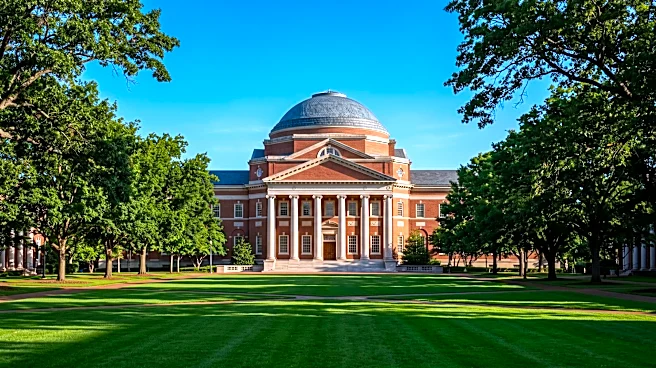
Virginia's public four-year colleges and universities have largely maintained steady undergraduate enrollment this fall, with a less than 1% increase over the previous year, according to early estimates from the State Council of Higher Education (SCHEV).
This stability comes despite a predicted national 'enrollment cliff' due to declining birth rates and changing attitudes towards higher education. However, the broader picture in Virginia is more complex, with a notable decline in graduate student enrollment, particularly at some of the state's largest institutions like Virginia Tech, where full-time graduate student enrollment is down over 7%. Private colleges in the state also experienced a 2.3% decline in undergraduate enrollment and a 2.6% overall decrease. A significant factor contributing to the graduate student decline is a drop in international student enrollment.
Why It's Important?
The steady undergraduate enrollment at Virginia's public institutions is a positive indicator for the state's higher education system, suggesting resilience against national demographic trends. This stability helps ensure a consistent pipeline of skilled workers for the state's economy and maintains the financial health of public universities. However, the decline in graduate student enrollment, especially among international students, poses challenges. Graduate programs are crucial for research, innovation, and specialized workforce development. A sustained decline could impact the state's competitiveness in key industries and its ability to attract top talent. The differing trends between undergraduate and graduate enrollment, and between public and private institutions, highlight the varied pressures and strategies within the higher education sector.
What's Next?
SCHEV is expected to release official census data later this year, which will provide a more definitive picture of enrollment trends. Universities across Virginia are actively exploring strategies to attract and retain students, including piloting three-year degree programs, implementing direct admissions, and enhancing student support services like mental health counseling and free tuition for low-income students. Radford University, for example, has seen success with these approaches, leading to increased graduate enrollment. Institutions will likely continue to focus on these innovative programs and support systems to counter potential future enrollment declines and address the specific challenges in graduate and international student recruitment. The state may also need to consider policies to support graduate programs and attract international students to maintain its competitive edge.
Beyond the Headlines
The enrollment trends in Virginia reflect broader national shifts in higher education. The 'enrollment cliff' is a demographic reality that many institutions are bracing for, making Virginia's public universities' ability to maintain undergraduate numbers particularly noteworthy. The decline in international graduate students could be influenced by various factors, including global economic conditions, visa policies, and geopolitical tensions, impacting the diversity and research capacity of U.S. universities. The focus on student retention, career-oriented graduate programs, and affordability underscores a growing emphasis on the value proposition of higher education in a changing economic landscape. This situation also highlights the importance of state-level policy and institutional adaptability in navigating demographic and economic challenges to ensure the long-term viability and relevance of higher education.