



What's Happening?
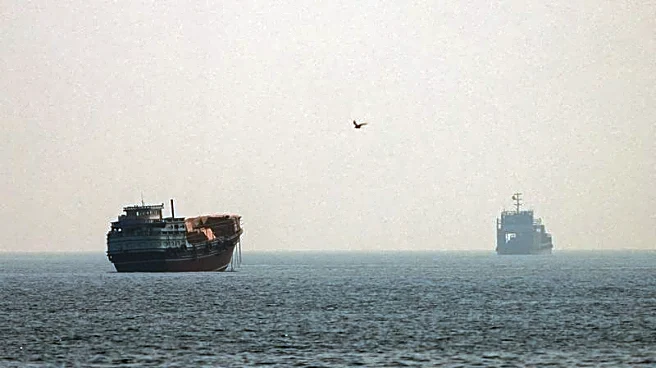
The United Arab Emirates (UAE) is planning to construct new ports and oil hubs in the Gulf of Oman to circumvent the Strait of Hormuz, which has been a focal point of regional conflict. The initiative, led by DP World, aims to establish a new port in Fujairah
and enhance infrastructure at other locations like Dibba and Khor Fakkan. This move is part of a broader strategy to reduce reliance on the Jebel Ali hub in Dubai and ensure uninterrupted oil exports amid tensions involving the US, Israel, and Iran. The project aligns with the India-Middle East-Europe Corridor (IMEC) initiative, which seeks to create alternative trade routes.
Why It's Important?
The development of new ports in the Gulf of Oman is crucial for the UAE's economic strategy, as it seeks to secure its oil export routes against geopolitical disruptions. The Strait of Hormuz is a critical chokepoint for global oil shipments, and its closure could have severe economic repercussions. By diversifying its export routes, the UAE aims to mitigate risks associated with regional conflicts and maintain its position as a key energy supplier. This initiative also reflects broader geopolitical dynamics, as countries in the region explore new alliances and trade routes to enhance economic resilience.
What's Next?
The UAE's port development plans are likely to proceed alongside diplomatic efforts to stabilize the region. The success of these projects will depend on securing international partnerships and investments, as well as navigating complex geopolitical landscapes. The IMEC initiative could gain momentum if it successfully integrates regional stakeholders, potentially reshaping trade patterns in the Middle East. However, political tensions, particularly involving Israel and Iran, may pose challenges to the project's progress.