





What's Happening?
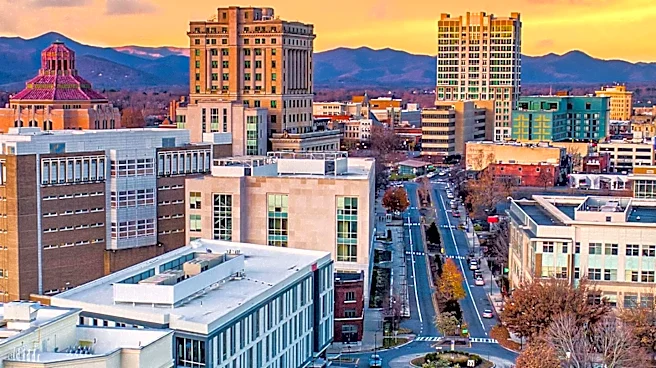
Asheville city officials have confirmed that $30 million in federal disaster recovery funding, allocated after Tropical Storm Helene, remains designated for flood-damaged commercial districts. This clarification comes amidst concerns raised by representatives
of the River Arts District regarding the future of these funds and whether nonprofit organizations would be eligible for assistance. The $30 million is part of Asheville’s larger $225 million allocation through the federal Community Development Block Grant Disaster Recovery program. City officials stated that no funding decisions have been finalized, and the money has not been redirected away from commercial areas along the French Broad and Swannanoa rivers. Staff members are currently gathering information on storm damage, current conditions, and recovery needs. A preliminary program manual is expected by the end of December, with more detailed program options and recommendations to be presented to City Council in early 2027.
Why It's Important?
The assurance that the $30 million in federal funds remains intact is crucial for businesses and nonprofit organizations in Asheville's flood-damaged commercial districts, particularly the River Arts District. These funds are vital for recovery and rebuilding efforts following Tropical Storm Helene. The delay in making spending decisions, however, creates uncertainty for those awaiting assistance. The discussion around whether the funds should be used for individual businesses or larger public infrastructure projects highlights a common challenge in disaster recovery: balancing immediate needs with long-term community resilience. The potential for projects like the RAD Creative Campus to qualify for funding underscores the importance of these federal allocations for cultural and economic development in affected areas. The city's approach to distributing these funds will significantly impact the pace and nature of Asheville's post-disaster revitalization.
What's Next?
Asheville city staff plans to publish a preliminary program manual by the end of December, outlining the framework for the federal grant. Following this, more detailed program options and recommendations will be presented to the City Council in early 2027. This will be a critical juncture for stakeholders, as it will likely provide clearer guidelines on eligibility, application processes, and the types of projects that will receive funding. Businesses and nonprofit organizations in the affected commercial districts will be closely watching these developments to understand when and how they can apply for assistance. The city has indicated that any future distribution of funds to nonprofit organizations or other non-governmental entities will be handled through a competitive application process, emphasizing the need for clear criteria and transparency.
Beyond the Headlines
The situation in Asheville reflects broader challenges faced by U.S. communities in the aftermath of natural disasters, particularly concerning the allocation and distribution of federal recovery funds. The tension between individual business aid and larger infrastructure projects is a recurring theme, often influenced by political considerations and long-term urban planning goals. The involvement of community advocates, such as those from the River Arts District, highlights the importance of local engagement in shaping recovery efforts. Furthermore, the process of gathering information on storm damage and recovery needs underscores the complex data collection and assessment required to effectively deploy disaster relief. The transparency and efficiency of this process can significantly impact public trust and the equitable recovery of affected communities, setting precedents for future disaster responses across the nation.