



What's Happening?
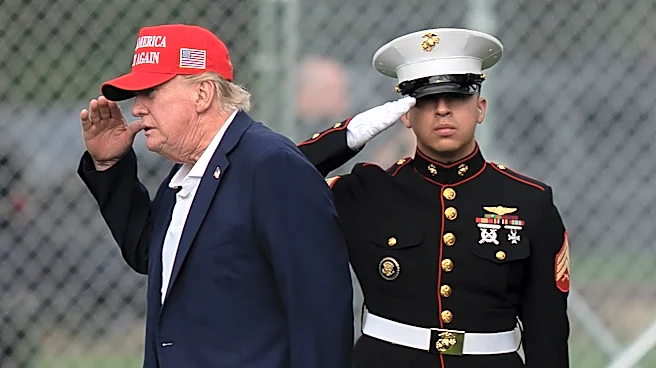
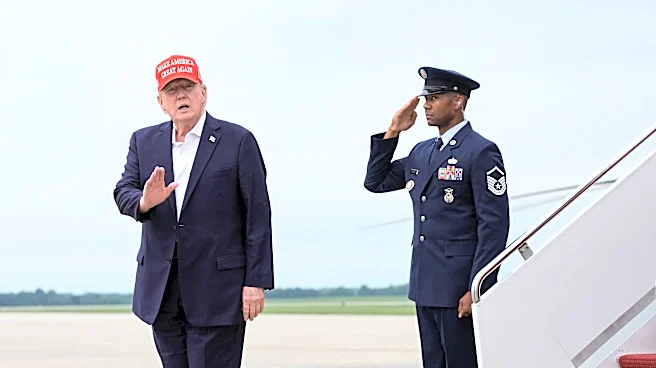
President Trump has ordered the Pentagon to scale back joint military exercises with South Korea, a decision announced via social media just hours before the drills were set to begin. This move has drawn criticism from Democratic Congressman Suhas Subramanyam
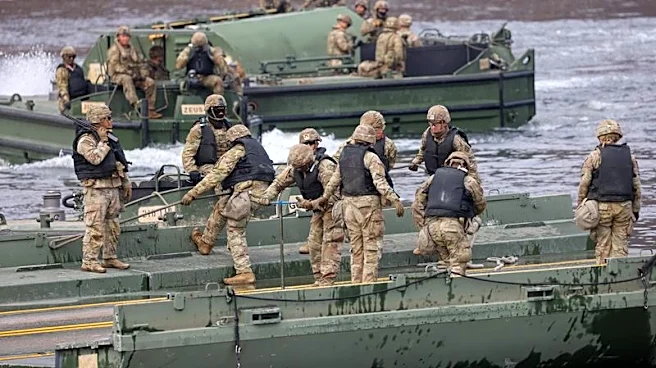
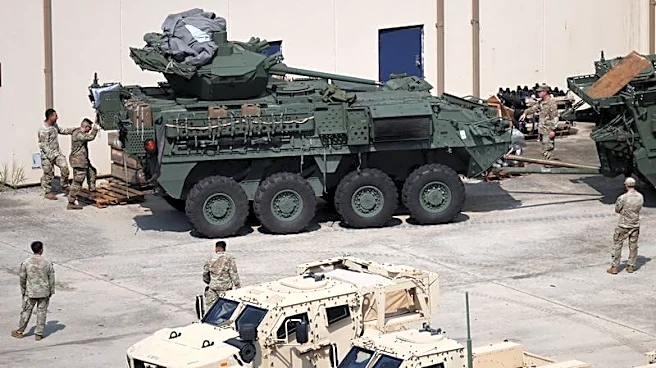
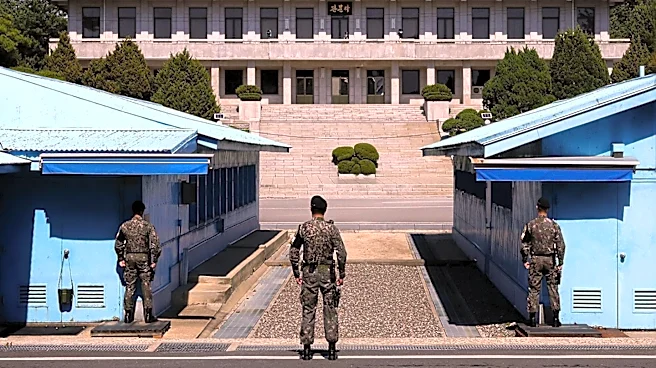
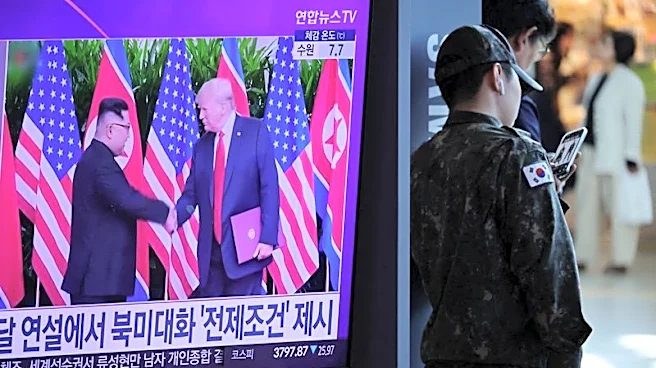
of Virginia, who recently returned from a bipartisan delegation to Korea assuring the government of strong U.S. alliance. President Trump cited South Korea's perceived lack of support in the 'Iran war' and his 'very good relationship' with North Korean leader Kim Jong Un as reasons for the reduction. This is not the first time President Trump has scaled back these operations, having done so in 2018 and 2019 during his first term. The exercises, officially known as Ulchi Freedom Shield, typically involve thousands of U.S. and South Korean troops training for various scenarios, including advanced modern warfare tactics like GPS jamming and drones. Despite President Trump's announcement, the South Korean government stated that the 10-day training exercise began as scheduled, expressing hopes that improved relations between North Korea and the U.S. could lead to peace on the Korean Peninsula.
Why It's Important?
This decision by President Trump carries significant implications for U.S. foreign policy, alliances, and regional stability in East Asia. Scaling back joint military exercises with a key ally like South Korea could be perceived as undermining the U.S. commitment to regional security, potentially emboldening adversaries like North Korea. Congressman Subramanyam highlighted that this action alienates long-standing allies and prioritizes 'extremist leaders and authoritarians' over established partnerships. The move also raises questions about the consistency and predictability of U.S. foreign policy, as decisions appear to be made on a whim rather than through established diplomatic channels. For South Korea, a reduction in joint drills could create uncertainty regarding its defense capabilities and the reliability of U.S. support, especially given the ongoing nuclear threat from North Korea. The linkage of the decision to the 'Iran war' further complicates international relations, suggesting a transactional approach to alliances that could have broader geopolitical consequences.
What's Next?
The immediate future will likely involve close observation of reactions from both South Korea and North Korea. South Korea has already indicated that the exercises commenced as planned, suggesting a potential divergence in approach or an attempt to maintain a semblance of normalcy. The long-term consequences of this decision, particularly on the U.S.-South Korea alliance and regional security dynamics, will unfold over time. Congressman Subramanyam anticipates 'unintended consequences for many years to come,' suggesting that the impact could be far-reaching. There may be further diplomatic efforts by President Trump to engage with North Korea, potentially seeking a 'win in the diplomacy area' amidst other international challenges. However, the lack of consultation with Capitol Hill and even his own administration, as noted by Subramanyam, indicates a potential for continued unilateral decision-making that could lead to further instability and uncertainty in U.S. foreign policy.
Beyond the Headlines
Beyond the immediate military and diplomatic ramifications, President Trump's decision highlights a broader shift in U.S. foreign policy towards a more transactional and less alliance-centric approach. This pattern of decision-making, characterized by social media announcements and a perceived disregard for traditional diplomatic processes, could erode trust among allies globally. The ethical dimension of prioritizing personal relationships with authoritarian leaders over established alliances, as suggested by Congressman Subramanyam, raises concerns about the long-term integrity of U.S. international relations. Furthermore, the linking of military exercises in East Asia to unrelated conflicts like the 'Iran war' demonstrates a complex and potentially problematic intertwining of global security issues. This approach could lead to a more fragmented international order, where allies are less certain of U.S. commitments and adversaries may exploit perceived weaknesses in alliances. The incident also underscores the growing influence of social media as a platform for major foreign policy announcements, bypassing traditional communication channels and potentially leading to misinterpretations and rapid shifts in international perceptions.