
What's Happening?
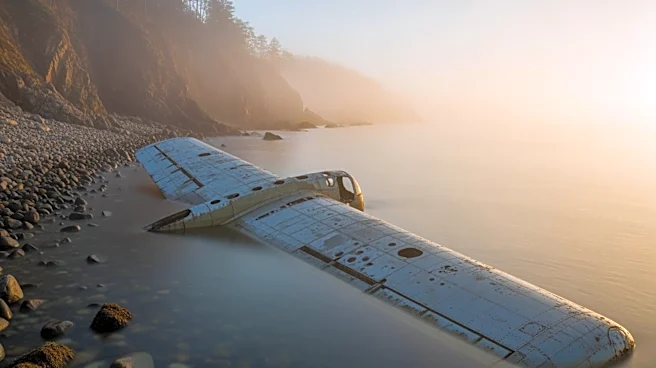
The United States and South Korea have announced a joint effort to locate and recover the wreckage of three American planes lost during the Korean War. These aircraft, which include a fighter jet and two
transport planes, crashed into the ocean off the northeastern coast of South Korea between 1950 and 1953. The operation will begin with land surveys in the Gangneung and Yangyang areas of Gangwon Province, followed by underwater investigations in August. The U.S. Defense Department's POW/MIA Accounting Agency (DPAA) and South Korea's Ministry of National Defense Agency for KIA Recovery and Identification are leading the initiative. The collaboration aims to gather research, engage with local residents, and utilize medical decompression chamber centers for underwater exploration. This effort is part of a broader agreement signed in 2025 to enhance cooperation in identifying and recovering remains of military personnel missing in action during the Korean War.
Why It's Important?
This joint operation underscores the ongoing commitment of both nations to honor and recover the remains of soldiers who served during the Korean War. For the United States, the recovery of these aircraft and the remains of servicemembers is a significant step in addressing the unresolved status of over 8,000 soldiers documented as missing in action. The collaboration also strengthens diplomatic ties between the U.S. and South Korea, reflecting a shared dedication to historical accountability and military cooperation. The initiative may provide closure to families of the missing servicemembers and contribute to the historical record of the Korean War, enhancing understanding of the conflict's impact and legacy.
What's Next?
The next phase of the operation involves divers conducting underwater investigations in August to locate and recover materials from the aircraft. The findings from these efforts could lead to further identification and repatriation of remains, offering closure to families and contributing to historical research. The collaboration may also set a precedent for future joint recovery operations, potentially involving other nations affected by the Korean War. Continued cooperation between the DPAA and South Korea's Ministry of National Defense could lead to advancements in recovery techniques and international partnerships in military archaeology.