
What's Happening?
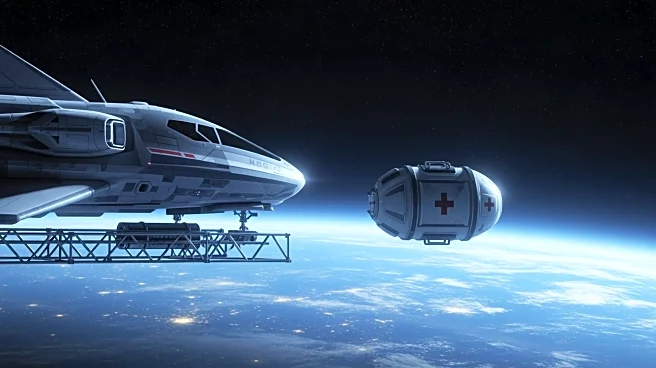
NASA recently conducted a rare medical evacuation from the International Space Station (ISS), bringing an astronaut back to Earth due to a medical issue that could not be fully treated in orbit. This decision was made after careful monitoring by NASA flight
surgeons and mission control teams, who determined that returning the astronaut was the safest option. The evacuation necessitated the appointment of a new ISS commander from the remaining crew to maintain leadership and operational stability. The ISS commander plays a crucial role in crew coordination, safety procedures, and communication with mission control, ensuring that the station operates smoothly 24/7. Despite the unexpected change, scientific experiments and communication with Earth continued without interruption.
Why It's Important?
This event underscores the complexities and risks associated with human spaceflight, highlighting the importance of astronaut safety over mission timelines. The decision to evacuate the astronaut reflects NASA's commitment to prioritizing health and safety, even when it involves altering meticulously planned missions. The incident also provides valuable insights for future missions, particularly as NASA prepares for longer journeys to the Moon and Mars, where medical autonomy will be critical. The ability to execute a safe and efficient medical evacuation demonstrates the robustness of current spaceflight systems and the importance of having contingency plans for medical emergencies in space.
What's Next?
The successful handling of this medical evacuation will likely influence NASA's planning for future missions, including the Artemis program and potential deep space travel. NASA will continue to study the effects of spaceflight on the human body, using data from such real-world events to improve training, equipment, and decision-making processes. As missions extend further from Earth, the need for advanced medical capabilities and autonomous health management systems will become increasingly important. NASA's transparent communication during this event has also reinforced public trust, which is crucial as space exploration becomes more ambitious.