





What's Happening?
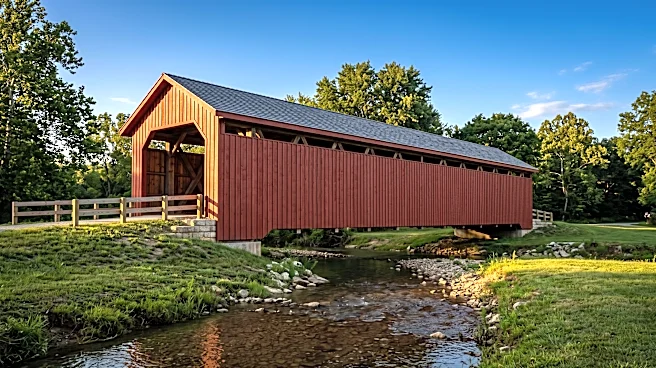
The village of Grand Rapids, Ohio, is being highlighted for its rich history and enduring charm as part of the 'We The People' series, which celebrates America's 250th anniversary. The community, situated along the Maumee River in Wood County, attracts
thousands of visitors annually due to its well-preserved historic buildings, walkable streets, and local businesses. Residents like Lynne Long, who has lived in the village for decades, emphasize the welcoming atmosphere and the importance of its historical foundations. The village's history includes its connections to trains and canal boats, and it was originally home to Native American tribes, including the Ottawa. The annual fall fest plays a significant role in generating funds for historical preservation activities, ensuring that the village's heritage continues to be celebrated and maintained.
Why It's Important?
The preservation and celebration of Grand Rapids, Ohio's historical heritage are important for several reasons. Firstly, it contributes to local tourism, drawing visitors who are interested in history and small-town charm, which in turn supports local businesses and the economy. Secondly, it fosters a strong sense of community identity and pride among residents, as highlighted by the emphasis on the friendliness and mutual support within the village. The dedication to historical preservation, funded in part by events like the annual fall fest, ensures that future generations can connect with the past and understand the origins of their community. This focus on heritage also provides educational opportunities, allowing both residents and visitors to learn about the area's Native American roots and its development over centuries.
What's Next?
Grand Rapids, Ohio, is expected to continue its efforts in historical preservation and community engagement. The annual fall fest will likely remain a key event for fundraising and attracting visitors, supporting ongoing initiatives to maintain the village's historic character. The community's commitment to celebrating its past, including its Native American heritage and its role in early American transportation, suggests that future events and projects will continue to focus on these themes. Local residents and organizations will likely continue to collaborate on initiatives that highlight the village's unique history, ensuring its appeal as a historical destination and a vibrant community for years to come. The ongoing 'We The People' series will further amplify the village's story, potentially drawing more attention and resources to its preservation efforts.
Beyond the Headlines
Beyond the immediate economic and community benefits, Grand Rapids, Ohio's dedication to preserving its history reflects a broader societal value placed on heritage and continuity. In an era of rapid change, communities that successfully maintain their historical integrity offer a sense of stability and connection to the past. This commitment can inspire other small towns to invest in their own historical assets, recognizing their potential as cultural and economic drivers. The village's ability to blend historical preservation with modern community life, offering both a glimpse into the past and contemporary amenities, serves as a model for sustainable development that honors tradition while embracing the present. This approach contributes to a richer cultural landscape and reinforces the idea that history is not just about the past, but a living part of a community's identity.