







What's Happening?
A new report by the Colorado solar industry indicates that the clean energy sector is a major driver of job creation and economic growth in Colorado's Eastern Plains. The report highlights a statewide economic impact of $6.3 billion from renewables. Clean
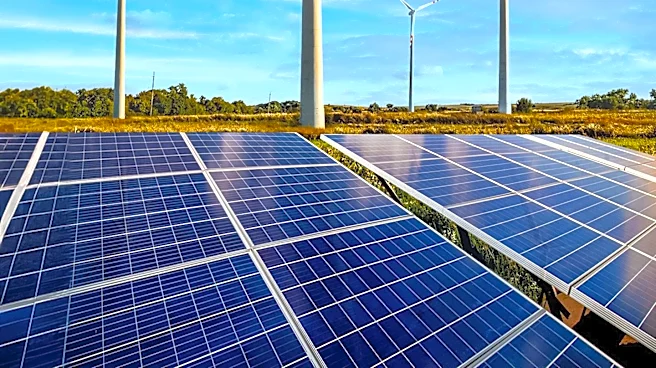
energy jobs in the Eastern Plains counties increased from 4,316 in 2010 to 6,715 in 2024, making utility jobs the second-highest-paying category in these areas. Colorado's electricity generation has transitioned significantly over the past two decades, moving from a reliance on coal and natural gas to utility-scale solar arrays, wind turbine farms, and backup battery storage. The state has a legal mandate to achieve 80% power generation from renewable sources by 2030, a target that utilities are currently on track to meet. This growth is expected to continue, with clean energy projected to add 3,594 jobs statewide over the next decade, including 961 in the Eastern Plains counties, boosting the economic impact by an additional $1.7 billion.
Why It's Important?
This development is important for the U.S. as it showcases a successful regional model for economic diversification and job creation through renewable energy, particularly in rural areas often reliant on traditional industries. The shift towards clean energy in Colorado demonstrates how states can meet ambitious environmental targets while simultaneously fostering economic prosperity. The high-paying nature of these jobs provides significant benefits to local communities, improving living standards and attracting new talent. This trend also highlights the potential for clean energy to offset job losses in the fossil fuel sector, offering a sustainable economic pathway. The report's findings could influence policy decisions at both state and federal levels, encouraging further investment and support for renewable energy projects in other rural regions across the U.S., thereby contributing to national energy independence and climate goals.
What's Next?
The clean energy sector in Colorado's Eastern Plains is projected to continue its expansion, with an anticipated addition of 3,594 jobs statewide over the next decade, 961 of which will be in the Eastern Plains counties. This growth is expected to contribute an additional $1.7 billion to the economic impact. The state's utilities are on track to meet the 2030 target of 80% power generation from renewable sources, indicating ongoing investment and development in solar and wind infrastructure. The report suggests that the construction of new transmission lines will also be a significant area of growth. Despite past federal encouragement for fossil fuel generation, the momentum in Colorado's clean energy sector is likely to persist, driven by state mandates and the economic benefits it provides. This continued growth could serve as a blueprint for other states looking to transition to renewable energy while bolstering local economies.
Beyond the Headlines
The success of clean energy in Colorado's Eastern Plains has deeper implications beyond immediate economic gains. It challenges the traditional narrative that rural economies must rely solely on agriculture or fossil fuels, demonstrating a viable alternative for sustainable development. The growth of high-paying jobs in renewable energy can help stem rural depopulation by offering attractive career opportunities, fostering community resilience, and diversifying local tax bases. This shift also highlights a broader cultural and ethical dimension, as communities embrace environmentally friendly practices that contribute to a healthier planet. The report implicitly contrasts state-level clean energy initiatives with federal policies that have historically favored fossil fuels, underscoring the potential for states to lead in climate action and economic innovation. This regional success could inspire a re-evaluation of national energy strategies, emphasizing the long-term benefits of investing in renewable resources for both economic stability and environmental stewardship.