




What's Happening?
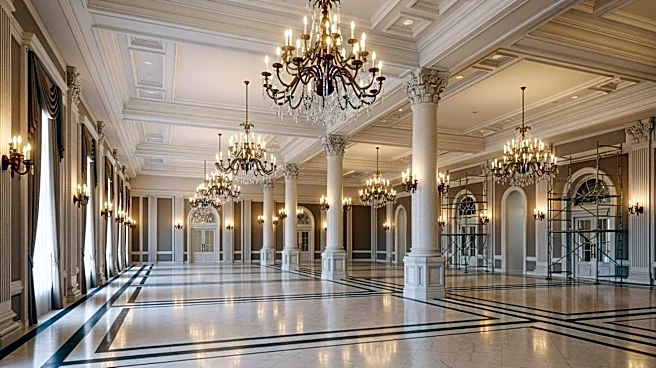
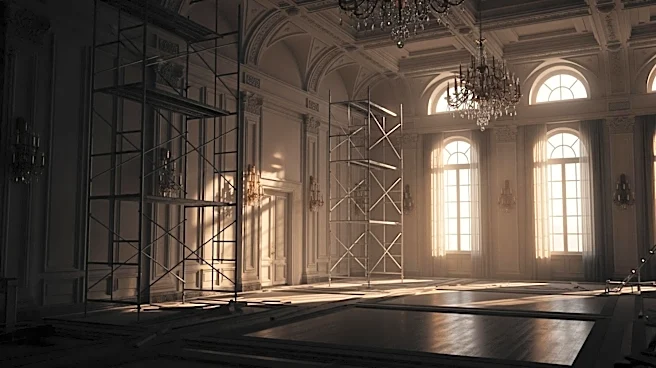
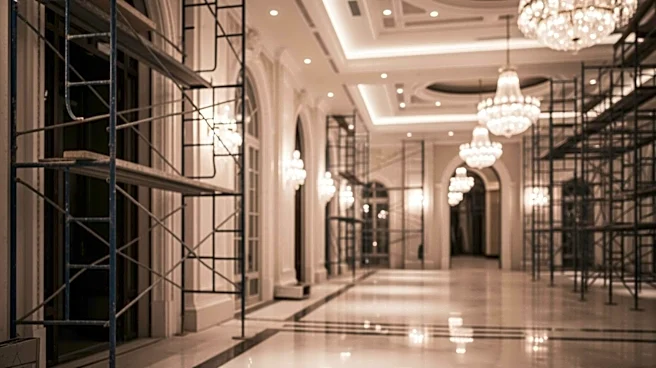
The U.S. Court of Appeals for the District of Columbia has ruled that construction on President Trump's new $400 million White House ballroom can continue until at least April 17. This decision extends a previous ruling by U.S. District Court Judge Richard
J. Leon, which allowed construction to proceed while the government appealed a lawsuit filed by the National Trust for Historic Preservation. The lawsuit challenges the legality of the project, arguing that the demolition of the historic East Wing and subsequent construction were conducted without proper authorization. The appeals court's decision was made with a 2-1 vote, and it has requested further clarification from Judge Leon regarding the implications of his injunction on the administration's safety and security plans.
Why It's Important?
The continuation of construction on the White House ballroom is significant due to the potential national security implications cited by the Trump administration. The administration argues that halting construction could leave the White House vulnerable, posing risks to the president, his family, and staff. The legal battle also highlights tensions between historic preservation efforts and executive authority, as the National Trust for Historic Preservation contends that the project exceeds presidential powers without congressional approval. The outcome of this case could set a precedent for future executive actions involving historic sites and federal property.
What's Next?
The district court has been asked to clarify how the injunction affects the administration's security plans, which could influence the ongoing legal proceedings. The National Trust for Historic Preservation is likely to continue its legal challenge, seeking to halt the project until a comprehensive review is conducted. The appeals court's decision to allow construction to proceed temporarily suggests that further legal arguments and decisions are forthcoming, potentially involving higher courts if the case escalates.