
What's Happening?
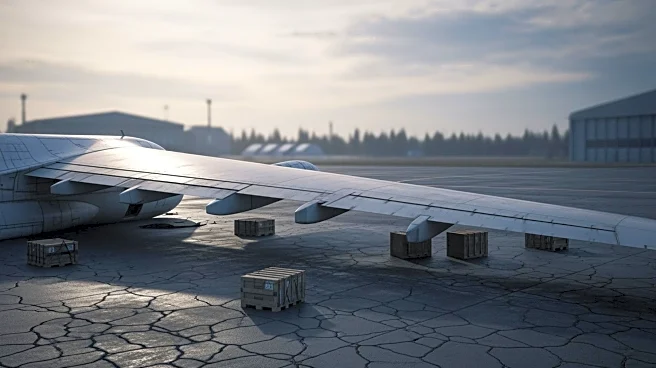
A Russian Antonov An-22, the largest propeller-driven military cargo plane in the world, crashed into the Uvodskoye Reservoir near Ivanovo Air Field, approximately 250 kilometers northeast of Moscow. The
crash occurred during a scheduled test flight following repairs. All seven crew members on board are presumed dead. The aircraft disappeared from radar without sending a distress signal, and debris was later found in the reservoir. This incident marks the second An-22 crash in the region within 18 months. The crew reportedly attempted to steer the plane away from a nearby residential area, avoiding ground damage.
Why It's Important?
The crash of the An-22 highlights ongoing challenges within Russia's military aviation sector, particularly concerning the maintenance and safety of its aging fleet. The loss of such a significant aircraft and its crew could impact Russia's military logistics and operational capabilities. Additionally, the incident may prompt further scrutiny of Russia's aviation safety protocols and maintenance practices. The crash also underscores the broader geopolitical tensions, as it coincides with Ukraine's strategic efforts to disrupt Russian logistics, potentially affecting Russia's military operations and economic interests.
What's Next?
Investigations into the crash are likely to focus on technical failures and maintenance issues. The Russian Ministry of Defense may face pressure to enhance safety measures and expedite the modernization of its fleet. Internationally, the incident could influence perceptions of Russia's military readiness and reliability. The crash may also affect Russia's strategic planning, particularly in the context of ongoing conflicts and geopolitical dynamics involving Ukraine and other nations.
Beyond the Headlines
The crash of the An-22 may have deeper implications for Russia's military-industrial complex, highlighting potential systemic issues in aircraft maintenance and operational readiness. It could also affect Russia's international standing, as incidents like these may be perceived as indicative of broader challenges within its military infrastructure. The event may prompt discussions on the sustainability of Russia's current military strategies and the need for modernization in the face of evolving global threats.