

What's Happening?
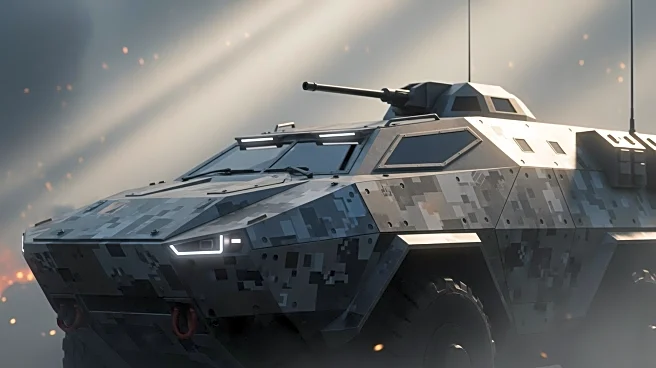
The U.S. Army's Stryker armored infantry carrier vehicle, with over 3,000 units in service, is a key component of the military's ground operations. The Stryker is designed to transport nine dismounted infantry soldiers, along with a driver and vehicle commander,
and is equipped with a variety of powerful weapons systems. The Dragoon variant of the Stryker features a 30 mm autocannon and a coaxial machine gun. This variant has a base unit price of $5 million, with an additional $5 million required for its high-tech weapons system upgrade. Recently, Chief video correspondent Graham Flanagan embedded with the Army's 2nd Cavalry Regiment during a training exercise in southern Germany. During this exercise, Flanagan received an in-depth tour of the Stryker vehicle from crew members and participated in a combat simulation where the Strykers transported soldiers to a combat zone and engaged an enemy stronghold.
Why It's Important?
The enhancements to the Stryker vehicle underscore the U.S. Army's commitment to maintaining advanced military capabilities. The investment in high-tech weapons systems for the Stryker reflects a broader strategy to ensure that U.S. ground forces remain equipped with cutting-edge technology. This development is significant for defense contractors and the military-industrial complex, as it represents continued government spending on military upgrades. The Stryker's capabilities enhance the Army's operational effectiveness, providing a tactical advantage in various combat scenarios. This could influence future military engagements and defense strategies, as well as impact the allocation of defense budgets.
What's Next?
As the U.S. Army continues to upgrade its fleet of Stryker vehicles, further developments in military technology and strategy are anticipated. The ongoing enhancements may lead to additional training exercises and evaluations to optimize the use of these vehicles in combat situations. Defense contractors involved in the production and upgrading of the Stryker may see increased demand for their services. Additionally, the Army may explore further innovations in armored vehicle technology to maintain its competitive edge. The impact of these upgrades on international military dynamics and defense policies will be closely monitored by military analysts and policymakers.