

What's Happening?
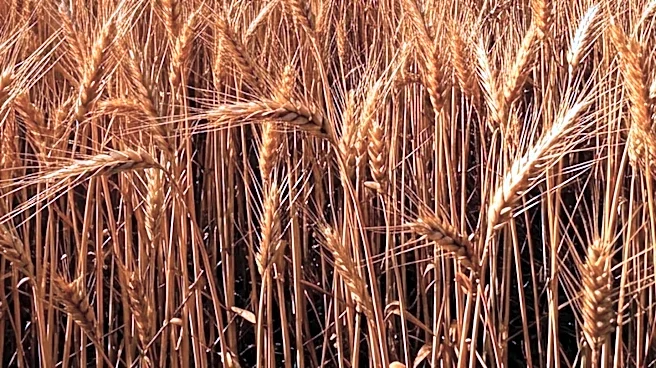
Syria has achieved self-sufficiency in wheat production for the first time since the onset of its civil war in 2011, according to an official statement. The country has been heavily reliant on imports, particularly from Russia, due to the war and severe
droughts that have impacted agricultural output. The Syrian Grain Establishment reported receiving 2.7 million tonnes of wheat during this year's harvest, surpassing the national requirement of 2.55 million tonnes. This marks a significant milestone for Syria, which last achieved self-sufficiency in wheat in 2010.
Why It's Important?
Syria's return to wheat self-sufficiency is a critical development for the country's food security and economic stability. The ability to produce enough wheat domestically reduces dependency on imports and can help stabilize food prices, which is crucial for a nation where over half the population faces acute food insecurity. This achievement also reflects broader geopolitical shifts, as Syria's new authorities, in power since 2024, have managed to secure wheat supplies and donations from allies like Russia and Iraq. The development could influence regional dynamics and Syria's economic recovery efforts.