

What's Happening?
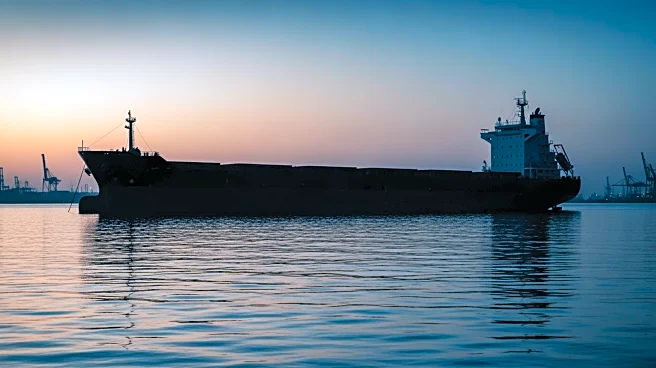
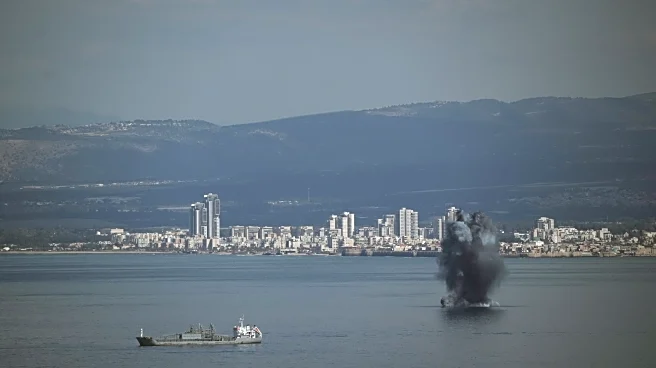
Maersk and Hapag-Lloyd, two major liner companies, have announced the suspension of key shipping routes due to escalating conflict in the Persian Gulf. This decision affects routes connecting the Far East to the Middle East and the Middle East to Europe,
with specific suspensions at Jebel Ali in the UAE. Hapag-Lloyd has rerouted its Asia to Northern Europe route around South Africa, while other carriers like CMA CGM and MSC have also announced changes. The conflict has led to significant disruptions, with estimates suggesting up to 250,000 TEU (twenty-foot equivalent units) stranded. MSC is invoking a 19th-century seafaring law to offload containers at safe ports, imposing an $800 fee per box. The situation is further complicated by stranded vessels, including car and livestock carriers, and rising fuel prices.
Why It's Important?
The suspension of these shipping routes has significant implications for global supply chains, particularly affecting the flow of goods between Asia, the Middle East, and Europe. The disruption could lead to shortages, especially in regions heavily reliant on imports, such as Dubai, which faces potential food shortages. The conflict has also caused a spike in fuel prices, impacting transportation costs. The rerouting and suspension of routes may lead to congestion at alternative ports, further straining logistics and increasing costs for businesses and consumers. The situation underscores the vulnerability of global trade to geopolitical tensions and the potential for widespread economic impact.
What's Next?
Shipping companies are expected to continue efforts to manage disruptions and reroute vessels to minimize the impact on supply chains. However, as the conflict persists, further adjustments and delays are likely. Stakeholders, including governments and businesses, may need to explore alternative supply routes and strategies to mitigate the effects of the conflict. The situation may prompt discussions on the need for more resilient and diversified supply chains to withstand geopolitical shocks.